|
Frequently Asked
Lacrosse Equipment Questions:
|
|
What do you need to play lacrosse?
Lacrosse is a full-contact,
fast-paced, and active sport. So to play your best, and protect yourself on
the field, you're going to need a full complement of great gear. This
includes:
- Lacrosse Stick:
Also called a
crosse, the lacrosse stick is your central weapon on the field. It
comes in two pieces; a shaft that can be easily grasped and wielded,
and a head to cradle and catch the ball. The lacrosse stick can also
be used to block shots, check opponents, and defend against checks.
- Pads:
Lacrosse pads protect you from hard shots, checks, pokes, and other
contact on the field. They are lightweight, low-profile,
and built for speed and agility, as well as safety and protection.
Most lax pads cover the arms, elbows,
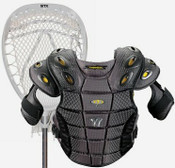
and shoulders. Lacrosse goalies wear different pads, including chest
protectors and rib guards.
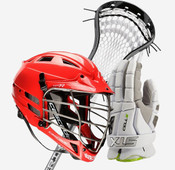
- Gloves:
Lacrosse gloves are designed to protect your fingers, hands, and wrists from checks and
impacts from other shafts.
- Helmet / Goggles:
Designed to
protect the head and face from impacts, body checks, and stick
checks.
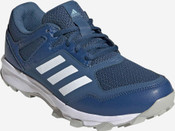
- Shoes / Cleats:
Lacrosse shoes or
lacrosse cleats give you the traction you need to fly up and down
the field. Designed for different types of field surfaces, lacrosse
cleats come in a variety of styles, tractions, and builds.
Top of Page
|
Do different positions require different equipment?
Generally, every player uses the same basic equipment; lacrosse stick, helmet, gloves,
cleats, etc. However, differences exist in these pieces of gear that
make them better suited to the needs of different positions on the
field. For instance, an attacker on the front lines is going to need
lightweight gear to keep him/her moving quickly through traffic.
Defenders, on the other hand, need longer sticks and stronger gear to
help block shots and repel attackers.
Check out the following chart to see the
differences between each pieces of lax gear, across every position on
the field:
|
Equipment |
Position |
| |
Attack |
Defense |
Goalie |
|
Lax Shafts |
An attacker or midfielder
(middie) uses a shorter, lighter shaft for faster, more agile,
aggressive moves. Mens attack lacrosse shafts usually measure 30" in length. |
Defensive players and middies
use longer, more durable shafts to extend their reach, block shots, and
throw harder checks. Mens defense lacrosse shafts usually measure 60" in
length. |
Goalies use a longer shaft
than attackers, but need more agility than defensemen to guard the goal.
Mens goalie shafts usually measure 40" in length. |
|
Lax Heads |
Attack and defense heads are
interchangeable. Although attackers generally prefer lightweight heads
with a maximum scoop, narrow pocket, and maximum offset for improved
ball retention and shot accuracy. Attack pockets are also strung
differently than defensive heads. |
Attack and defense heads are
interchangeable. Although defensive players generally prefer a stronger,
more durable head to throw hard checks. Flat scoops are also better for
plays off the ground, and a wider pocket allows for more blocking area.
|
Goalie heads are significantly
different than attack and defense heads in both size and shape. Up to
12" wide, the larger circumference and shape allows for better shot
blocks and ball retention in goal. |
|
Pads / Helmets |
Since they are facing off
against defensemen, attackers need more comprehensive padding to protect
from checks. Full coverage elbow guards and arm guards deliver solid
protection, while lightweight shoulder pads keep them agile and fast.
|
Defensive players require less
padding than attackers. Elbow pads and arm pads provide adequate
coverage without the bulk and restrictions of full elbow and arm guards. |
Goalie pads are completely
different than those worn by attackers and defenders. Goalie-specific
gloves are designed with additional padding. Lacrosse goalie chest
protectors and chest pads wrap around the body and protect from hard
shots on goal. Goalies also wear padded pants to protect thighs, shins,
hips, and groin from impact. |
Top of Page |
What differences are there between men's and women's lacrosse?
Men's and women's lacrosse
is basically the same game, but each operates under different rules,
leading to stark differences in the look of each player.
For instance, The rules of women's lacrosse
are designed to reduce the amount of physical contact between players.
In turn, female lacrosse players don't require the same padding, gloves,
and helmets as male lacrosse players, to protect them.
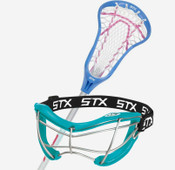
Women lacrosse
players typically only wear a mouth guard and pair of goggles. Womens
lacrosse sticks are also slightly different than men's. Womens lacrosse
heads feature shallower pockets, and women's lacrosse shafts are
typically shorter, and smaller in diameter. Top of Page |
How do I find the right lacrosse head?
Lacrosse heads are the most varied,
and also the most important piece of lacrosse equipment in your lineup. They come
in all sizes, shapes, designs, and price ranges. But remember, a
great lacrosse head can make a huge difference in your game, giving
you improved accuracy, ball handling, check strength, and shot
velocity.
With such a huge selection and
variety out there, knowing what to look for to find the lacrosse
head for you can be a confusing process. When choosing a lacrosse
head though, it's all about finding the one that will highlight your
skills, and fit your position, your style, and your budget.
First of all, it's important to understand the
parts of a lacrosse head, to
get a sense of how they differ, and what these differences mean to
your game:

- Sidewalls -
- Affect the strength and
stiffness of the head, determining its effectiveness in body
and stick checks.
- Can range from flexible to
very stiff.
- Stiff heads are heavier,
but deliver harder checks, making them good for
defensive players.
- Flexible heads are
lightweight and malleable, making them great for picking
up ground balls and fast, agile movements.
- Give the head and pocket its
shape and depth.
- Can be low, mid, or high,
affecting the pocket's depth and how the ball is kept in the
pocket, also known as ball retention.
- Sidewall height can also
affect shot and pass accuracy.
- Scoop -
- The top portion of the head
used to pull balls off the ground.
- Also where shots and passes
leave the pocket.
- Scoops are measured in width
and drop. Drop refers to the dip in the center of the scoop.
- Dramatic drop scoops
deliver maximum shot accuracy
- Minimal or flat scoops
are great for playing ground balls.
- Pocket -
- Refers to the area towards
the base of the head where the ball resides.
- Head's pockets can either
come unstrung, or complete with factory strung pockets. New
players should have their heads pre-strung, while
experienced lacrosse players will want to customize their
pocket.
- Pocket width is determined
by the head itself.
- Wide pockets are good
for new and defensive players, since they deliver less
accuracy and make it harder to hold onto the ball, but
give you a wider area to block shots and passes.
- Narrow pockets deliver
the best accuracy and ball retention, but make catching
and blocking harder.
- Offset -
- Refers to gradual decrease
of the rail, or sidewall, in relation to the center line of
the handle.
- An offset puts the scoop
behind the line of the handle, improving cradling and ball
retention.
Top of Page |
|
How do I find the right lacrosse shaft?
Just
as diverse, yet not as complicated as heads, lacrosse shafts are
used to control the ball, put power and accuracy behind shots, and
check the competition.
Lighter shafts keep you more agile and
faster down the field, while stronger shafts hold up to regular
abuse and deal out serious checks. The balance between these two
features is referred to as a stick's strength-to-weight ratio.
Generally, the more expensive a shaft is, the lighter and stronger
its material.
In the modern world of lacrosse, popular
companies such as STX, Warrior, Gait, Harrow, and Brine use advanced
metal alloys and carbon materials to build space-age, lightweight,
and strong shafts for unprecedented performance.
Shafts today are
made from:
|
Aluminum Alloy
 |
Strong and light aluminum-based alloys
create some of the most affordable and accessible lacrosse shafts
for all players and positions.
- Not as strong as other, more
advanced materials
- Versatile and easy to use
- Without a natural grip, most
lacrosse companies add grip patterns or tack for more control
- Perfect for young and developing
players
|
|
Composite
 |
Made of high-grade carbon fibers,
composite shafts are incredibly strong, yet amazingly lightweight.
- Carbon composite shafts naturally feature a
solid grip
- Feel warm in cold weather, and cool in hot
conditions
- Designed for intermediate to
advanced players
- Perfect for attackers
|
|
Titanium
 |
Stronger and lighter than aluminum,
titanium lacrosse shafts are designed to take and dish out hard
hits.
- Lightweight won't slow you down
- Plenty of strength for checking
or defending
- Perfect for advanced players
|
|
Scandium
 |
With the highest strength-to-weight
ratio in the game today, Scandium sticks have quickly become a
favorite amongst top level players.
- Extreme durability for lasting
performance and strength
- Lightweight for fast movements
and improved agility
- Preferred by elite and pro-level
lacrosse players
|
When picking a new lacrosse shaft, it's
also important to find one that feels good in your hands, and gives
you total control of the stick. Some shafts include a built-in grip,
texture, or tack areas on the surface to help you wield it more
accurately.
Top of Page |
Can I buy a complete, pre-made lacrosse stick?
Advanced, elite, and professional
players will generally want to purchase their lacrosse head and
shaft separately, to get a customized stick. However, many companies
such as STX, Warrior, and Brine offer complete lacrosse sticks,
including their advanced heads and basic shafts in one package.
Complete sticks are cost effective and great for new, young, and
developing players!
Top of Page |
|
What pads do I need to protect myself on the field?
Lacrosse Gloves
Mostly used in men's lacrosse, lacrosse
gloves look similar to ice hockey gloves. They are heavily padded to
protect the hands, fingers, wrists, and forearms from stick and body
checks on the field. Modern, high-end lacrosse gloves feature
lightweight, impact-absorbing padding, ventilation in the backhand
and fingers, and thin, synthetic or mesh palms for great stick grip
and feel.
Lacrosse goalie gloves utilize extra
padding and protection in the thumb area to prevent injury from
blocking shots.
Since women's lacrosse rules out checks
to the body, women's lacrosse gloves are significantly less padded
than men's. Mostly used for warmth, grip, and basic protection from
abrasions, women's lacrosse gloves are lightweight, thin, and only
mildly padded.

Lacrosse Shoulder Pads
To keep players fast and agile, yet
still protected from body shots, lacrosse shoulder pads are
lightweight and flexible, fitting close to the body for maximum
effectiveness. A set of pads covers your shoulders, back, and chest
in low-profile, low-weight padding.
Arm Pads / Elbow Pads
Additional pads are worn in men's
lacrosse to protect players arms and elbows from hard stick checks
and impact.
- Elbow Guards - The most
protective pads for attackers and middies, elbow guards fully
cover and enclose the arm and elbow.
- Arm Guards - Designed for great
protection and mobility for all positions, arm guards cover the
upper arm with padding and feature an elbow cap for durable
protection.
- Arm Pads - Great for defensemen
and middies, arm pads are lightweight and slide on easily for
low-profile, moderate protection and performance.
- Elbow Pads - Perfect for
defensemen, lightweight elbow pads slide easily on and off, and
provide minimal coverage with maximum mobility.
Lacrosse Helmets /
Lacrosse Goggles
Depending on your position, the type of
lacrosse you play, your gender, or age, you may be required to wear
a helmet or a pair of goggles on the field. Lacrosse helmets are
typically worn in men's lacrosse, and are aerodynamic and
lightweight, with a brim, complete facemask, and built-in chin
guard, for total facial and cranial protection.
Lacrosse goggles, typically worn in
women's lacrosse, are simpler, and designed to comfortably fit
around the head and protect the eyes and face with a durable metal
wire system.
Top of Page |
|