
Basketball Hoop Height by Age: What You Should Know
Posted by Doug Ervin on Aug 17th 2026
- Basketball Hoop Height by Age: The Full Chart
- Why Hoop Height Matters for Skill Development
- Toddler and Mini Basketball Hoops
- Adjustable vs. Fixed Basketball Hoops
- Sports Unlimited: Basketball Systems for Every Age and Skill Level
- Frequently Asked Questions
The Short Answer: Basketball hoop height should match the age and size of the player. Toddlers start as low as 4 to 6 feet, youth players progress through 8 and 9 feet, and players age 12 and older use the regulation 10-foot hoop. Using the right height at each stage protects proper shooting mechanics and builds confidence.
Most people know that the regulation basketball hoop height is 10 feet. What fewer people realize is that starting younger players on a 10-foot hoop often does more harm than good. When the rim is too high, young players compensate by throwing the ball rather than shooting properly, and those habits are hard to undo later.
The right hoop height at each age gives players the best chance to develop proper shooting form, stay engaged, and build the foundation they need as they progress.
Basketball Hoop Height by Age: The Full Chart
According to the NBA and USA Basketball Youth Guidelines, an 8-foot basket is recommended for players ages 7 to 8, and a 9-foot basket for players ages 9 to 11. Below is a full breakdown across all age groups.
| Age Group | Recommended Hoop Height | Notes |
|---|---|---|
| Ages 2-4 (Toddler) | 4 to 5 feet | Mini or toddler hoop; focus on fun and motor skills |
| Ages 5-6 | 6 feet | Introductory play; emphasis on basic movement |
| Ages 7-8 | 8 feet | NBA/USA Basketball recommended height for this age group |
| Ages 9-11 | 9 feet | NBA/USA Basketball recommended height; bridges the gap to regulation |
| Ages 12 and older | 10 feet | Regulation height for high school, college, and professional play |
These are guidelines, not strict rules. A physically advanced 10-year-old may be ready for 10 feet, while a smaller 12-year-old might still benefit from 9 feet. The goal is always finding the appropriate height that supports proper shooting mechanics, not matching a specific age.
Why Hoop Height Matters for Skill Development
The Problem with Starting Too High
When a hoop is too high for a young player, they physically cannot shoot with proper form. Instead of using legs, core, and arms in the correct sequence, they resort to heaving the ball upward or launching it with their whole body. These movement patterns become the default shooting motion over time.
According to a joint announcement from the NBA and USA Basketball, lowering the basket height for younger players directly assists with developing proper shooting form and increases the opportunity for shooting success.
Age Versus Skill Level
Age is a useful starting point, but skill level matters too. A child who has been playing organized basketball for a couple of years may have better mechanics than the chart suggests. A child just picking up the sport might need a lower hoop to build confidence first.
Watch how your player shoots. If they are using two hands, scooping from the side, or relying on momentum rather than technique, the hoop is likely too high. Lower it until their form looks controlled, then raise it gradually as they improve.
Signs a Hoop Is the Wrong Height
Here are the signs to watch for that tell you whether the hoop height needs adjusting:
- Too high: The player heaves with both hands, scoops from the hip, or consistently misses short. Frustration or disinterest in shooting are also signals.
- Too low: The player rarely misses and isn't being challenged. The hoop should be raised.
- About right: The player can shoot with one hand while using the other as a guide, bends and extends their legs for power, and maintains a controlled shooting motion. The basket should be challenging without forcing the player to sacrifice proper form.
Toddler and Mini Basketball Hoops
Most basketball hoop guides skip players under age 5. For toddlers and preschool-age children, the goal isn't basketball skill development. It's motor skills development, hand-eye coordination, and introducing the sport in a low-pressure way.
Mini and toddler basketball hoops typically range from 4 to 5.5 feet with lightweight balls and wide rims that make scoring easy and fun. A child who develops a positive relationship with the sport early on is far more likely to stay engaged as they grow. Look for height-adjustable hoops so the same system can carry from toddler play into the early youth years.
Adjustable vs. Fixed Basketball Hoops
Here's a straightforward breakdown of both options.
Adjustable Basketball Hoops
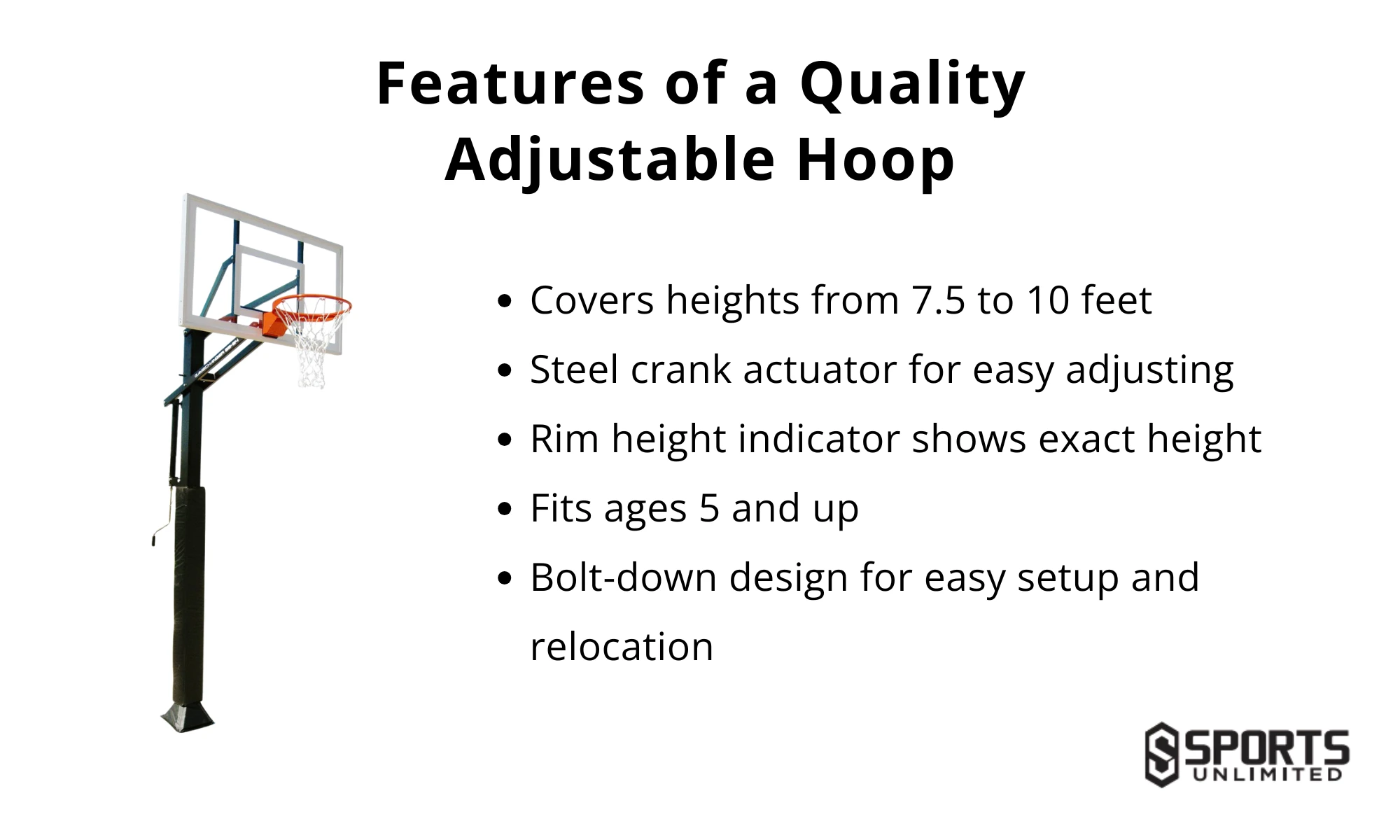
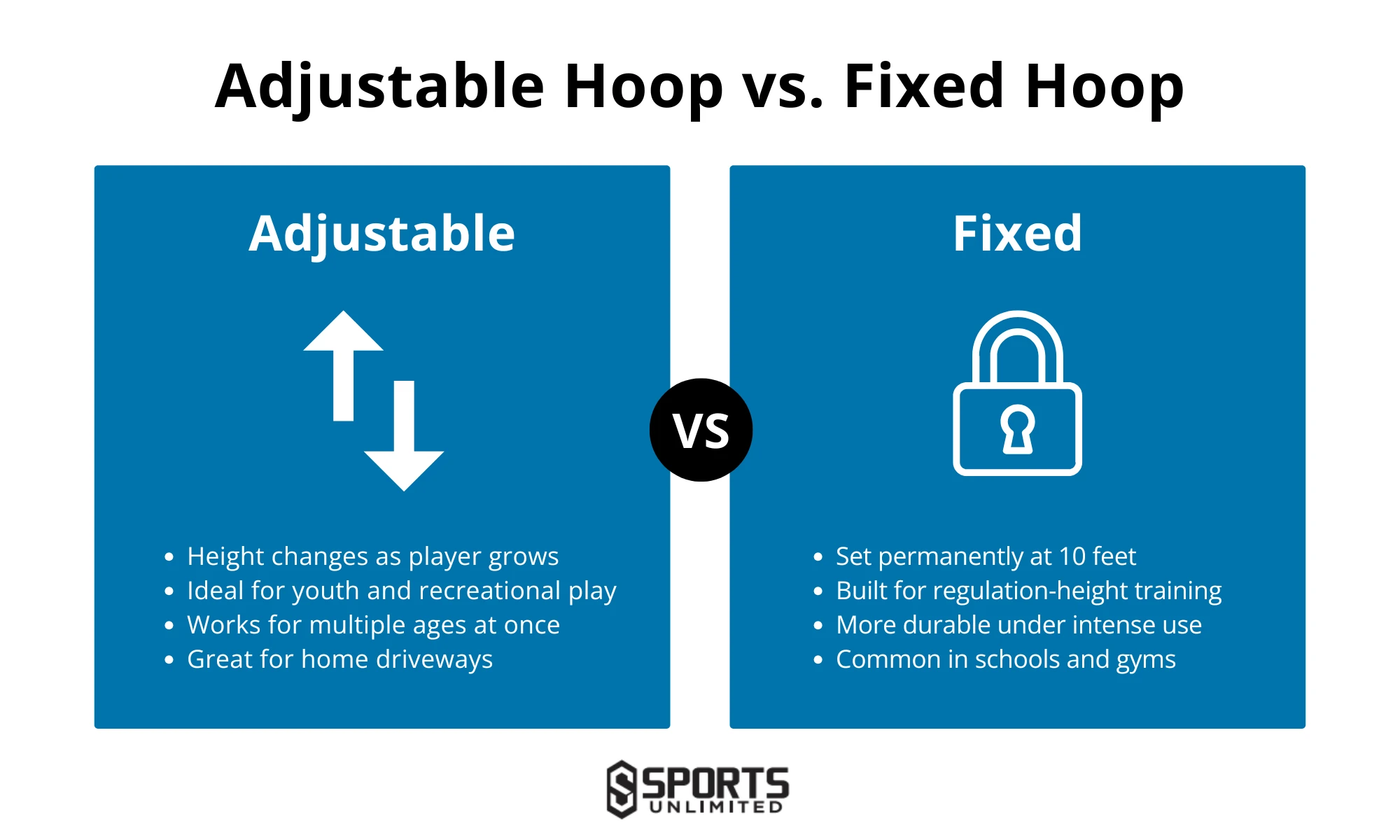
An adjustable basketball hoop allows the rim height to be changed as a player grows. Most adjustable height systems cover 6 to 10 feet, making them ideal for families with younger players who will progress through multiple height stages. USA Basketball's youth development guidelines note that using age-appropriate equipment significantly impacts a young player's experience, which is exactly what adjustable hoops are designed for. They are the better choice for most families and work well for households with children of varying ages and skill levels.
Fixed Height Hoops
Fixed hoops are set at a permanent height, typically 10 feet. These are common in schools, parks, and competitive play settings. For home use, a fixed 10-foot hoop makes sense once a player is 12 or older and committed to training at regulation height. They are generally more durable than adjustable systems and better for intense long-term training.
- Choose adjustable if your player is under 12 or if multiple children of different ages will use the hoop.
- Choose fixed if your player is 12 or older, playing competitively, and primarily trains at regulation height.
Sports Unlimited: Basketball Systems for Every Age and Skill Level
Sports Unlimited has been equipping athletes since 1983 and carries a full range of basketball hoops for players at every stage. Sports Unlimited carries adjustable hoops for youth players and regulation in-ground setups for serious training, covering every age group and skill level. The lineup also includes basketball rims, backboards, court accessories, apparel accessories, and training aids like goal return systems.
Orders placed before 3 PM ship the same day, and select products qualify for free 2-day shipping. Coaches and program directors can reach out directly for bulk and team orders. Browse the full basketball hoop selection at Sports Unlimited and find the right hoop for where your player is today.
Frequently Asked Questions
What height should a basketball hoop be for a 7-year-old?
The NBA and USA Basketball recommend an 8-foot hoop for youth basketball players ages 7 to 8. This allows young players to practice proper shooting form without having to heave or throw the ball toward the rim.
When should a youth player move to a 10-foot hoop?
The standard basketball hoop height is 10 feet, and most youth basketball players are ready for it at age 12. A physically advanced player with strong mechanics may be ready earlier, while a smaller or newer player might benefit from staying at 9 feet a little longer.
What is the right hoop height for a toddler?
Toddler hoops typically range from 4 to 5.5 feet. At this age the focus is on fun and motor skill development, not shooting technique. A kids basketball hoop with a wide rim and lightweight ball is the right choice for children under age 5.
Is an adjustable basketball hoop worth it?
Yes, for most families. An adjustable hoop can serve a player from early youth play through regulation height, making it a practical long-term buy for building fundamental skills at every stage. It also works well for households with children of different ages.
What happens if a child practices on a hoop that is too high?
Young players develop bad habits like scooping, two-hand heaving, or excessive body lean to get the ball to the rim. These habits are difficult to correct later. Starting at the right height protects proper shooting mechanics from the beginning.