
Choosing the Best Soccer Goal for Your Backyard
Posted by Doug Ervin on Apr 6th 2026
- Types of Backyard Soccer Goals
- Choosing the Right Goal Size
- Frame Materials and What They Mean for Durability
- Safety and Setup for Backyard Goals
- Sports Unlimited: Your Source for Backyard Soccer Goals
The Short Answer: The best backyard soccer goal depends on the player's age, skill level, and available space. Portable goals work best for most backyards because they are easy to set up and simple to store when not in use.
A backyard soccer goal turns any outdoor space into a training ground. Finding the right one means looking beyond price and brand. Goal type, size, frame material, and safety features all play a role in whether a goal holds up through daily use or ends up sitting in a garage. This guide breaks down what matters most so you can make a confident decision before you buy.
Types of Backyard Soccer Goals
Soccer goals come in three main types, and each one serves a different purpose. Knowing the difference helps narrow down the right option before getting into size or material.
Portable Soccer Goals
Portable goals are the most practical option for backyard use. They are built with a lightweight design that makes them easy to assemble, break down flat for storage, and transport to a local park or training camp when needed.
Frame construction typically comes down to steel or aluminum. Aluminum is lighter and resists rust, making it easier to move and store, while steel offers more rigidity for players who shoot hard. Both materials hold up well for recreational play and regular training sessions.
Foldable Soccer Goals
Foldable soccer goals are a step up from basic pop-up designs and one of the most convenient options for backyard use. They fold down flat for easy storage, set up quickly without tools, and are light enough to move between the backyard and other locations without much effort.
The tradeoff compared to a standard portable goal is rigidity. Foldable goals work well for casual backyard play and training sessions with younger players, but they are not built to handle the same level of impact as a steel or aluminum frame goal over time.
Permanent Soccer Goals
Permanent goals offer the most stability and are built to regulation standards, but they require ground anchors or concrete installation, which makes them impractical for most backyards. Space requirements alone put them better suited for dedicated training facilities, schools, and full-size fields.
For the average backyard, a portable goal delivers the flexibility and storage convenience that a permanent structure simply cannot.
Choosing the Right Goal Size
Selecting the right goal size is one of the most important decisions, and it should be based on the age and skill level of the player.
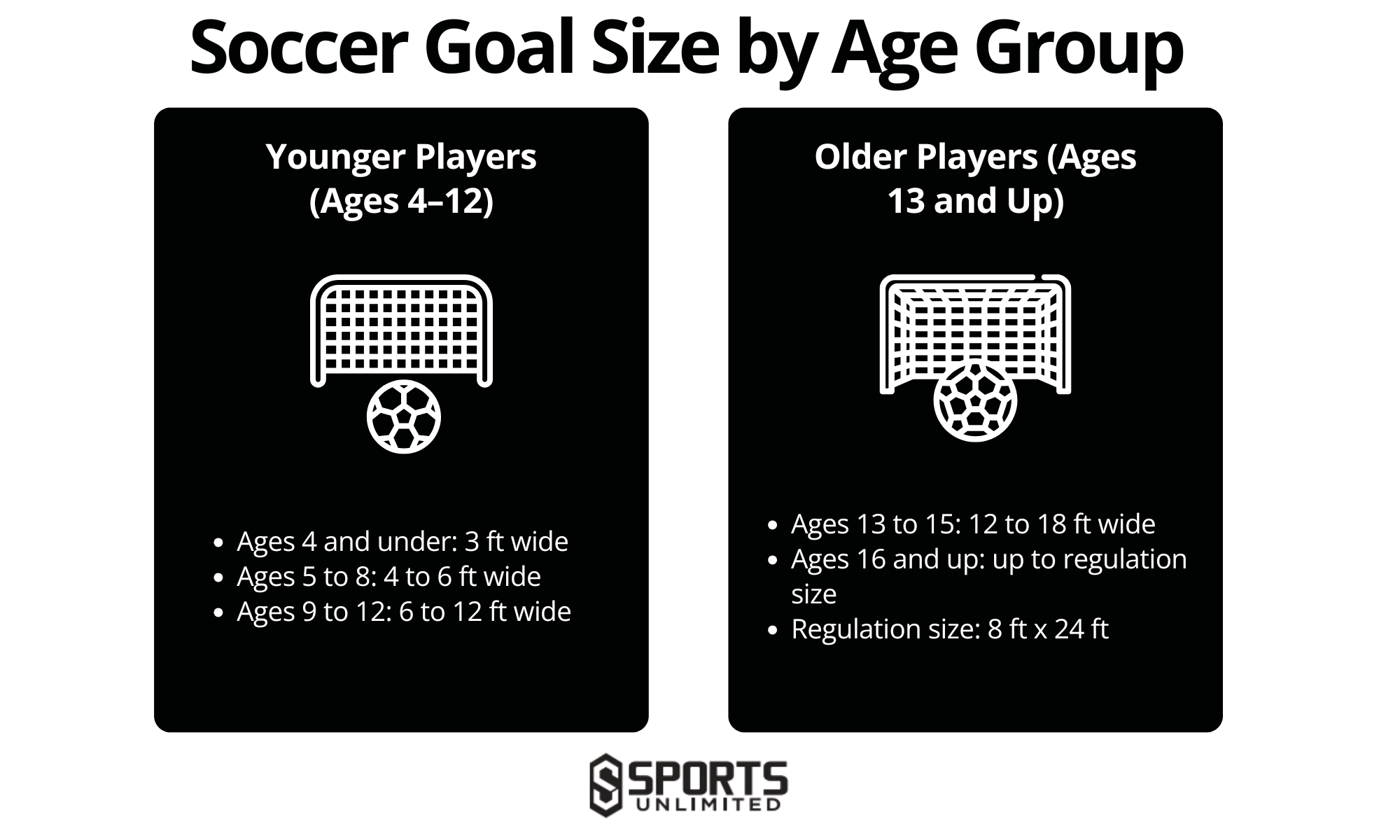
Size by Age Group
Smaller goals are better for younger players because they help develop accuracy and ball control. Larger goals give older players a chance to practice realistic game situations, including shooting angles and goalkeeping. A goal that is too large for a young player removes the accuracy challenge that builds precision at an early age.
Here is a general size guide by age, based on youth soccer standards according to the Eastern Pennsylvania Youth Soccer Association:
- Toddlers and ages 4 and under: 3–4 ft wide goals for introductory play
- Ages 5 to 8: A kids soccer goal in the 4 to 6 ft wide range matches this age group well
- Ages 9 to 12: A goal between 6 and 12 ft wide is appropriate for youth games and training
- Ages 13 and up: Players moving toward competitive youth soccer can practice on larger goals up to regulation size, which is 8 ft tall by 24 ft wide
Matching Size to Your Backyard Space
Available space matters as much as player age. A regulation-size goal requires significant depth behind the net, so measure your backyard before purchasing and leave room on the sides and behind the goal for safe play. A goal that fits both the space and the player will produce better training results than simply going with the largest option available.
Frame Materials and What They Mean for Durability
Frame material plays a bigger role than most people expect. It determines weight, portability, and has a direct impact on how well a goal holds up through harsh weather and repeated use.
Steel Frames
Steel is the heaviest of the three common frame materials but also the most rigid. It resists flex during hard shots and handles rough conditions better than plastic alternatives, making it a solid choice for older players who need a goal that stays planted during a training session. The downside is weight. Steel goals take more effort to move and store, and cheaper frames can rust without a protective coating.
Aluminum Frames
Aluminum frame goals balance durability and portability better than steel for most backyard situations. It does not rust, handles outdoor conditions well, and stays lighter than steel for easier transport. It is the go-to material for high quality portable and youth soccer goals, and the practical choice for anyone who moves or stores their goal regularly.
Plastic Frames
Plastic frames are common in entry-level goals and foldable designs aimed at younger kids. They are the lightest option and work well for casual play, but repeated hard shots and UV exposure can cause them to crack or warp over time. For toddlers and younger kids playing recreationally, plastic gets the job done.
Safety and Setup for Backyard Goals
An unsecured soccer goal is the most common safety issue with portable backyard setups, and it is entirely preventable with the right anchoring.
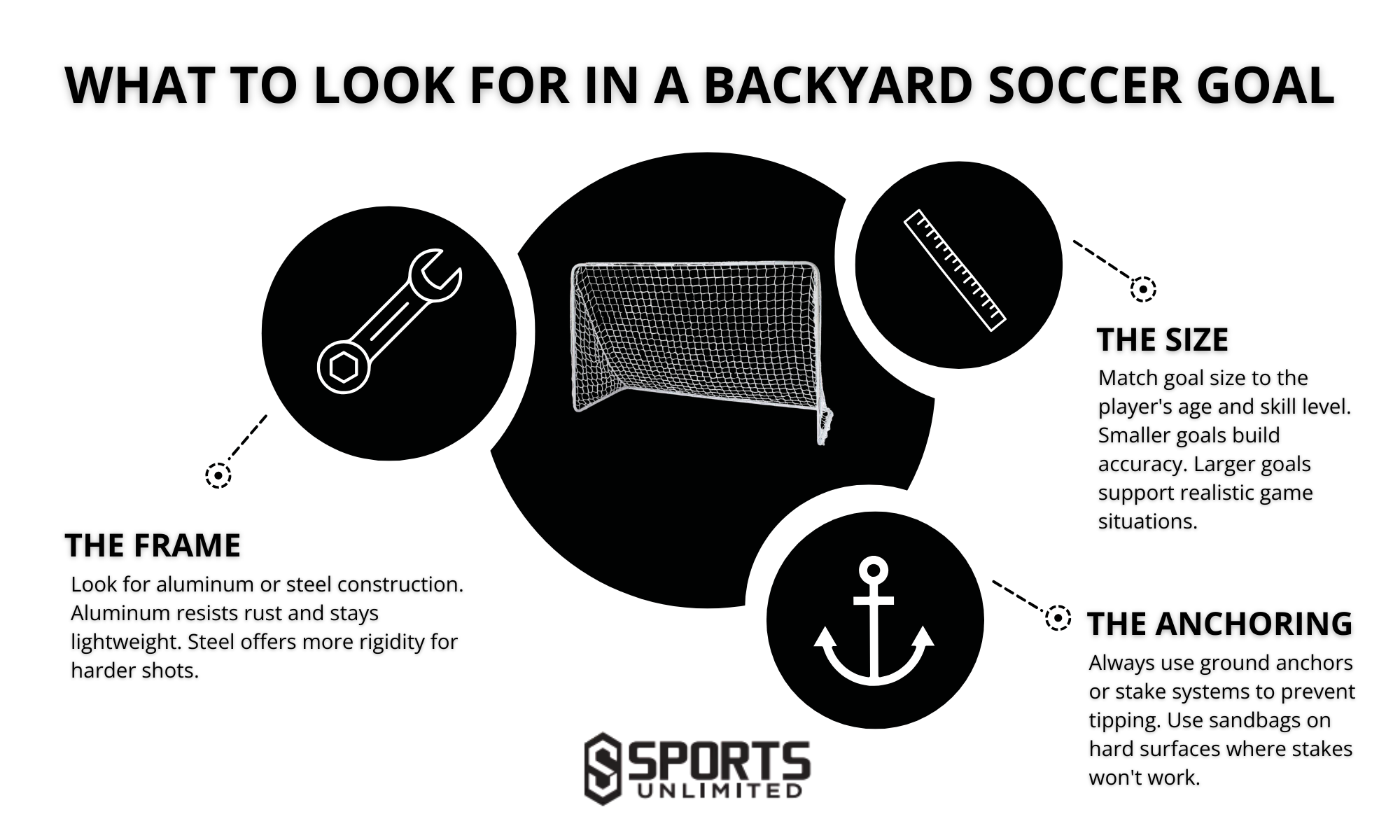
Anchoring and Stability
Most portable goals come with ground anchors or stake systems, and they should always be used regardless of weather conditions. Wind can shift a goal quickly, and an unsecured frame can tip forward without warning.
For added stability on hard surfaces like concrete or artificial turf, where stakes cannot be used, sandbags or weighted bags placed on the back bar of the frame are an effective alternative. Safety guidelines from the U.S. Consumer Product Safety Commission recommend that all portable soccer goals be securely anchored or counterweighted at all times during use.
Storage and Maintenance
Portable goals last longer when stored properly between uses. Breaking down the frame and storing it in the carry bag protects the net and frame joints from prolonged UV exposure and moisture. Goals left assembled outdoors through harsh weather seasons wear out faster, regardless of frame material.
Check the net periodically for fraying or tears, and inspect frame connections for looseness before each training session. Most brands offer replacement parts, so a worn net does not always mean replacing the entire goal.
Setup Tips for Different Backyard Surfaces
- Grass: Use the included ground anchors at all corners for a secure setup
- Artificial turf: Use weighted sandbags on the base bar in place of stakes
- Concrete or paved surfaces: Weight the back bar and keep the goal away from hard barriers where players could fall into the frame
Sports Unlimited: Your Source for Backyard Soccer Goals
The right backyard soccer goal comes down to matching size, frame material, and goal type to the player using it. A goal that fits the player and the space supports skill development at every age and holds up through years of backyard games and training sessions.
At Sports Unlimited, we have been a trusted source for athletic gear since 1983 and have operated fully online since 2008. Orders placed before 3 PM ship the same day, and select products qualify for free 2-day shipping.
We carry a range of sizes and styles to fit different needs and backyard setups. Browse the selection below to get started:
- Soccer Goals — Shop portable, foldable, and youth soccer goals across a range of sizes for backyard and recreational play.
- Soccer Nets — Find replacement nets and full goal and net sets for backyard and training use.
- Soccer Training Equipment — Browse soccer rebounders, soccer targets, and training gear to build a complete backyard setup.