
How to Clean and Maintain a Football Helmet
Posted by Lou Rusnock on Nov 12th 2026
- Why a Clean Helmet Matters
- How to Clean a Football Helmet
- What Not to Use on a Football Helmet
- Inspect the Helmet While It Is Apart
- When Cleaning Is Not Enough
- Sports Unlimited: Your Source for Football Equipment and Parts
The Short Answer: Cleaning a football helmet should be a regular part of equipment care, not something saved until the end of the season. Mild soap and warm water can be used to clean the helmet shell, while interior padding and removable parts should be washed according to the manufacturer's instructions. Once everything is completely dry, inspect the helmet for signs of damage. Regular cleaning, routine inspections and professional reconditioning when required help keep your helmet in good condition throughout the football season.
Throughout the football season, helmets collect sweat, dirt and bacteria during practices and games. Without regular cleaning, this buildup can lead to unpleasant odors and skin irritation. However, using the wrong cleaning products or methods can damage helmet materials, making proper care just as important as keeping your equipment clean.
Why a Clean Helmet Matters
After practice, football gear often gets tossed into a closed equipment bag, trapping moisture inside. Without proper ventilation, these damp conditions can encourage bacteria growth in helmet padding and lead to unpleasant odors.
For football players, a dirty helmet can contribute to several problems:
- Skin irritation: Damp padding and repeated friction against the forehead and jaw can cause chafing, redness and rashes.
- Helmet acne: Trapped sweat, heat and friction can contribute to breakouts around the forehead, temples and chin.
- Shared contamination: Bacteria and other germs can spread when players share helmets or come into contact with contaminated sports equipment.
How to Clean a Football Helmet
Work in a sink or tub, and allow a few hours for the full process. Washing takes 20 to 30 minutes, but interior pads and liners need several hours of air drying at room temperature.
What You Need
- Mild soap or plain dish soap
- A bucket or sink of warm water
- A soft cloth and a microfiber cloth
- A soft-bristled brush for vents and hardware
- A non-bleach, alcohol-free disinfectant wipe or disinfectant spray
- A spray bottle of clean water for rinsing
The Steps
- Strip the removable soft goods: Unsnap the chin strap and pull out the removable jaw pads and comfort liners. Leave the facemask attached so you do not wear out or misalign the mounting hardware. Keep chin strap buckles and snaps in a small container.
- Knock off loose dirt: Shake the helmet out and brush the vents, ear holes and facemask mounts before water touches it.
- Wash the helmet shell: Wipe the exterior with a soft cloth and warm soapy water, paying attention to screws and vents where grit collects. Rinse and dry with a microfiber cloth.
- Clean the interior: Wipe the inside with the same soapy mix, using the brush gently on fixed padding rather than soaking the liner.
- Clean pads by hand (do not soak): Wipe removable pads down thoroughly with a damp, soapy cloth. Rinse them using a clean cloth dampened with fresh water, press out excess surface moisture with a towel, and lay them flat to air dry.
- Disinfect: Go over the interior surfaces with an alcohol-free, bleach-free disinfectant wipe and let them air dry.
- Dry completely: Air dry the helmet and pads upside down in a well-ventilated area for several hours, never with a hair dryer. A damp helmet in a gear bag invites mold and bacterial growth. Reassemble only once there is no moisture inside.
Cleaning the Facemask and Football Visor
The football chin strap can be washed by hand in the same soapy mix, rinsed in cold water and hung to dry. Never put a chin strap, shoulder pads or any football pads through a washing machine, which breaks down padding and hardware.
A football visor needs different handling. Take it off the helmet first, so grit does not get trapped at the edges or scratch the lens against the clips. Wash the visor with a microfiber cloth and clean water, since soap and household cleaners can leave a film that catches the light and creates glare. For greasy fingerprints, heavily diluted dish soap works if the visor is rinsed thoroughly afterward.
What Not to Use on a Football Helmet
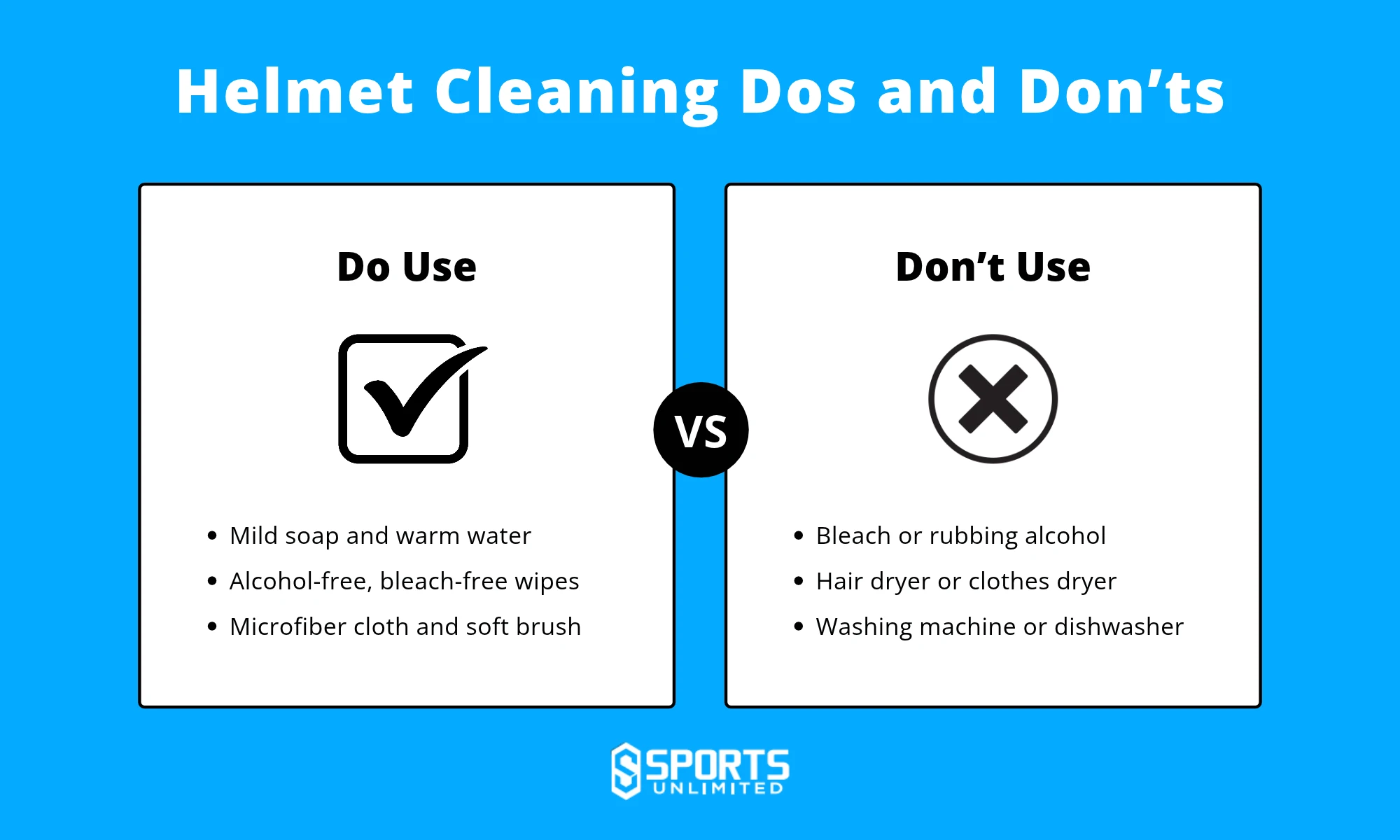
Football helmets contain protective materials that can be damaged by improper cleaning methods. Before using any cleaning products, check the manufacturer's care instructions to avoid damaging the helmet shell, padding or other components.
- Harsh chemicals and solvents: Strong cleaners, household solvents and commercial polishes may damage helmet materials. Riddell warns against using unauthorized cleaners, which can also void the warranty.
- Rubbing alcohol and bleach: Avoid using these products unless specifically approved by the helmet manufacturer. Certain chemicals can damage padding, shell finishes or coatings on a football visor.
- Direct heat: Never use a hair dryer, clothes dryer or radiator to speed up drying. Excessive heat can damage helmet materials. Allow the helmet to air dry in a well-ventilated area instead.
- Direct sunlight: Avoid leaving a helmet outside or on a hot car hood to dry. Prolonged sunlight and high temperatures can damage materials over time.
- The washing machine: Never put an assembled football helmet in a washing machine. Check the manufacturer's instructions before washing any removable pads or accessories.
Repainting a football helmet also requires care. Manufacturers may restrict which paints can be used, as incompatible products can damage the shell and compromise its integrity. Keep warning labels and date codes visible, as removing or covering them can also void the manufacturer's warranty.
Inspect the Helmet While It Is Apart
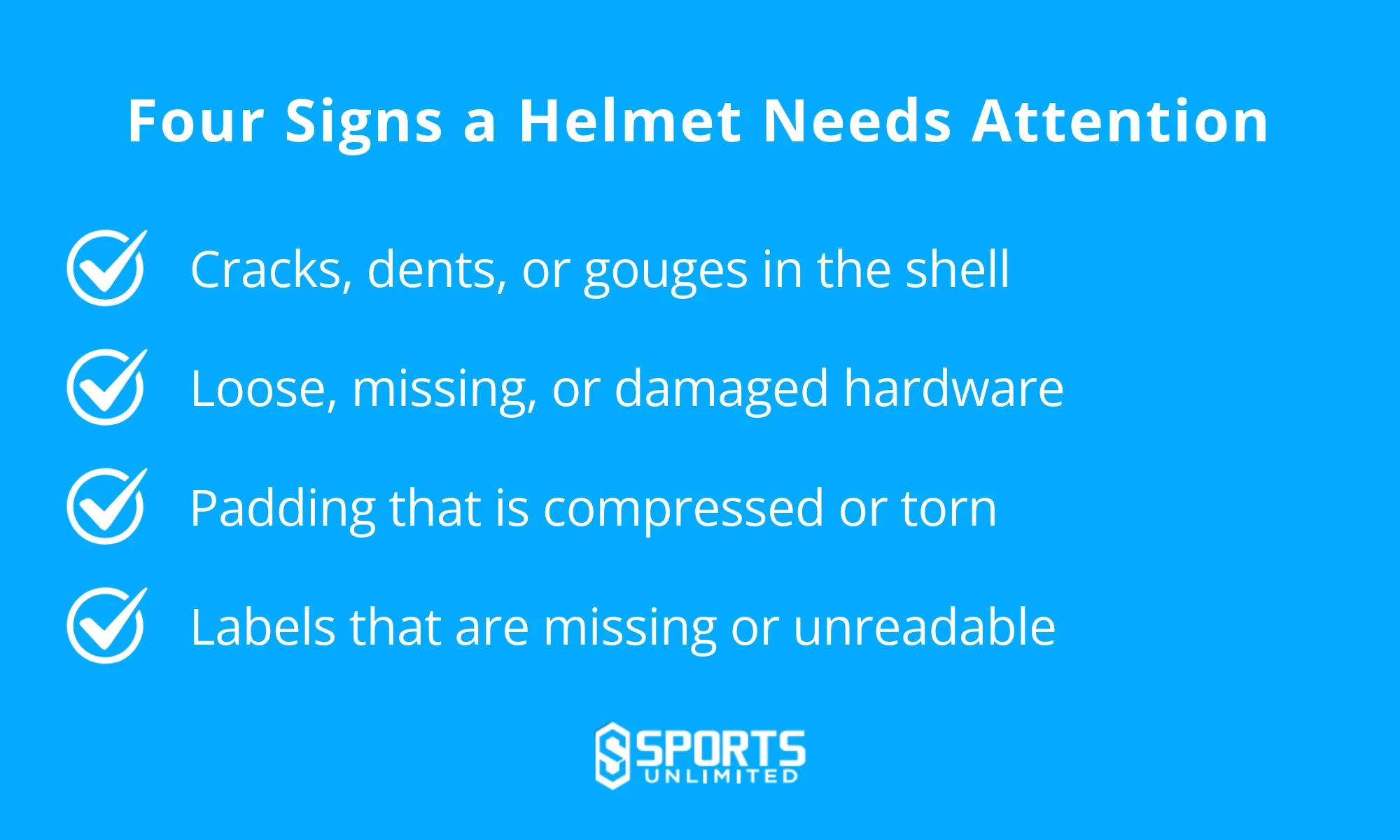
Cleaning is a good opportunity to inspect your helmet for signs of wear or damage. Check the shell, padding and hardware before each use, even if everything appears to be in good condition.
Look for:
- Cracks, dents or deep gouges in the helmet shell
- Loose, missing or damaged screws and other hardware
- Padding that is compressed, torn or no longer fits properly
- Air bladders that lose pressure, if your helmet has inflatable padding
- Frayed chin straps, damaged snaps or worn attachment points
- Warning and recertification labels that are missing or unreadable
After inspecting the helmet, try it on to check for proper fit. Padding can wear down over time, and youth football helmets may need adjustments as players grow. If you notice damage or fit problems, stop using the helmet and have a qualified equipment professional inspect it before returning to play.
When Cleaning Is Not Enough
Regular cleaning helps maintain a football helmet, but it doesn't replace professional reconditioning and recertification. Riddell recommends annual reconditioning and requires it at least every two years under its warranty terms. According to NOCSAE, professional reconditioning involves disassembling, inspecting, cleaning and repairing helmets as needed. Most football helmets can be recertified until they reach 10 years of age under NAERA guidelines. Since the process typically takes six weeks or more, plan to send your helmet in shortly after the season ends. Always follow your helmet manufacturer's specific requirements.
Sports Unlimited: Your Source for Football Equipment and Parts
Keeping your football helmet in good condition also means checking for worn or damaged components. Sports Unlimited, a family-owned retailer in business since 1983, carries the football equipment you need for helmet maintenance, including chin straps, facemasks and visors. A helmet bag helps protect against scratches during storage and transport, while our universal helmet inflator pump and needle kit allows players to adjust inflatable padding in compatible Riddell and Schutt helmets. Eligible in-stock orders placed before 3 p.m. ET Monday through Friday ship the same day, with some exclusions. Coaches purchasing equipment for an entire team can also contact our Team Department at 610-825-5339 for assistance.