
Softball Equipment List: Everything You Need to Get Started
Posted by Doug Ervin on Apr 6th 2026
- The Standard Softball Equipment List
- Softball Bats: What to Know Before You Buy
- Fielding Gear and Protective Equipment
- Catcher's Equipment for Softball
- Sports Unlimited: Your Source for Softball Gear
At a Glance: A complete softball equipment list starts with a bat, glove, batting helmet, and cleats. Catchers and youth players need additional protective gear, and all equipment must meet the rules of your specific softball league.
Playing in a softball game means showing up prepared. Knowing what gear you need before the season starts saves time and keeps you on the right side of the softball rules. This guide walks through every piece of softball gear on a standard equipment list, from batting equipment to full catcher setups.
The Standard Softball Equipment List
Every softball player needs a core set of gear before stepping onto the softball field. The list varies slightly depending on your league and position, but the basics stay the same across youth leagues and adult play alike.
Core Gear for Every Player
These are the items every softball player needs regardless of position or level:
- Softball bat: Must meet your league's certification requirements. USA Softball requires the USA Softball certification mark on all non-wood bats.
- Softball glove: Sized for your position and age. Outfielders use larger gloves; infielders use smaller ones.
- Batting helmet: Required in all leagues. Youth leagues typically require a helmet with a face mask and chin strap.
- Cleats: Metal cleats are common in adult leagues. Many youth leagues require rubber or molded cleats.
- Softball pants: A standard uniform piece for most leagues.
- Team jersey: Provided by your league or team in most cases.
Other Gear Worth Having
Some items are not required by most leagues but can improve comfort, protection, and organization during a softball game.
- Batting gloves: Improve grip and reduce hand sting on mishits.
- Sliding shorts: Worn under softball pants to protect the hips and thighs when sliding.
- Equipment bag: Keeps bats, gloves, helmets, and accessories organized and easy to transport.
- Warm ups: A jacket and pants set useful for staying loose before games and during cooler weather.
Training Equipment for Individual Development
Basic training tools can make a big difference for players working on their game outside of scheduled practices. Batting tees and hitting nets allow for repetitive solo work on swing mechanics, while pitching machines help develop timing against consistent pitch speeds. Resistance bands and lightweight strength tools round out a solid at-home training setup for a full softball season.
What Coaches and Teams Should Have
A basic team kit usually includes extra softballs, a first aid kit, a cooler for hydration, and batting practice equipment. Having these items on hand reduces delays and keeps players focused during practice.
Softball Bats: What to Know Before You Buy
Softball bats are one of the most regulated items on the softball equipment list. Buying the wrong bat can get a player removed from a game, so it's worth understanding the rules before you shop.
Certifications and Approved Bats
Most softball leagues publish a bat list of approved bats. USA Softball requires all non-wood bats to carry the USA Softball certification mark. This mark confirms the bat has passed performance and safety testing, including a maximum bat ball speed threshold of 98 mph. USA Softball maintains an updated list of all certified equipment on their official website.
If you play slow pitch or travel ball, check whether your league uses USA Softball or USSSA. Both organizations maintain their own approved bat lists, and each requires a permanent certification mark on the bat's taper. Slow pitch and fastpitch also have different approved bats, and using the wrong certified equipment can result in a player being ruled ineligible. You can review USSSA's bat mark rules on the USSSA fastpitch bat marks page.
Bat Length and Bat Weight
Choosing the right bat comes down to two numbers: bat length and bat weight.
- Bat length is measured in inches and should match the player's height and reach.
- Bat weight affects swing speed and power. Lighter bats are easier to swing but generate less force.
- Drop weight is the difference between bat length and bat weight. A 34-inch bat weighing 28 oz has a drop of -6.
Youth softball players generally do better with a lighter bat. Getting bat sizing right early helps develop proper swing mechanics and build confidence at the plate. Stronger players in an adult league may prefer less drop for more power behind contact.
Slow Pitch vs. Fastpitch Bats
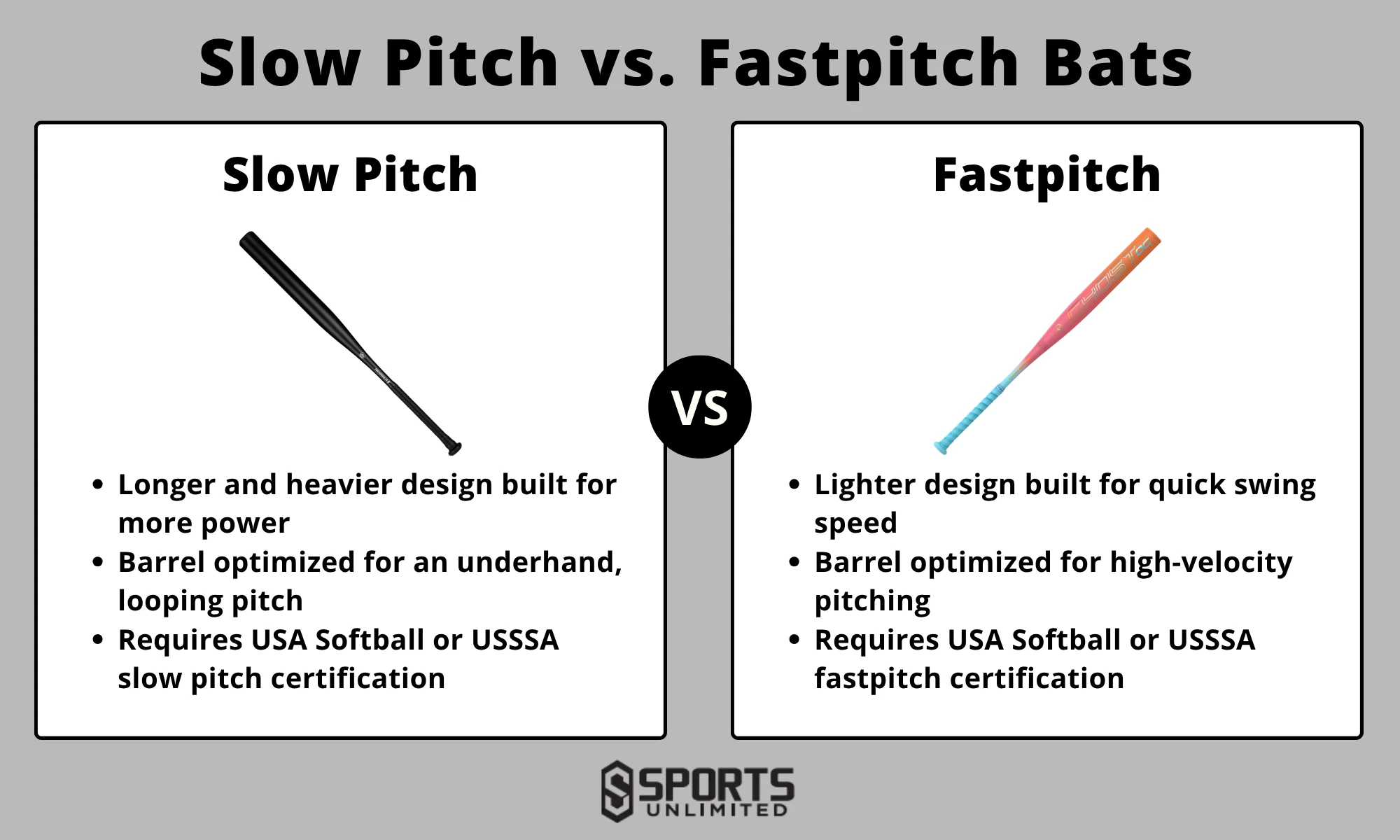
Slow pitch bats and fastpitch bats are not interchangeable. Slow pitch bats are typically longer and heavier, built for a different swing path. Always verify which bat type your league allows before purchasing.
Fielding Gear and Protective Equipment
Beyond the bat, fielding gear is the next most important category on the softball equipment list. Protective equipment plays a bigger role in softball than many new players expect.
The Softball Glove by Position
Unlike other pieces of softball equipment, the best softball glove for you will vary by the position you play. Infielders use shorter gloves with a shallower pocket to make quick transfers, while outfielders go longer for more reach on fly balls. First base mitts are built wider with extra padding for scooping throws, and pitchers typically use a closed-web design to hide their grip from batters.
Finding the Right Glove Fit
Fit is just as important as glove type. A glove that is too large is harder to control and slows down transfers. Most adult infielders fit best in an 11.5 to 12-inch glove, outfielders in a 12.5 to 13-inch, and youth players generally in a 10 to 11.5-inch glove. For a more detailed breakdown by position and age, Rawlings offers a full glove sizing guide on their website.
Footwear and Uniforms
Footwear matters more than players often expect. Metal cleats offer better grip but are restricted in many youth leagues, where rubber or molded cleats are the standard. For uniforms, softball pants should allow full range of motion. Most players add sliding shorts underneath for hip protection and wear warm ups before games to stay loose.
Face Masks and Helmet Safety
A face mask is required for catchers in all organized softball leagues. Many youth leagues also require pitchers and certain infielders to wear face masks during games and practices.
Batting helmets must be free of sharp edges and cracks, and any helmet showing visible damage should be replaced before the next softball game. For youth softball players especially, properly maintained protective gear directly affects safety and confidence on the field.
Catcher's Equipment for Softball
Catchers require more protective gear than any other position on the field. The role puts players directly in the path of pitched balls, foul tips, and base runners, which is why a full catcher's setup looks very different from what everyone else carries in their bag.
What a Catcher Needs
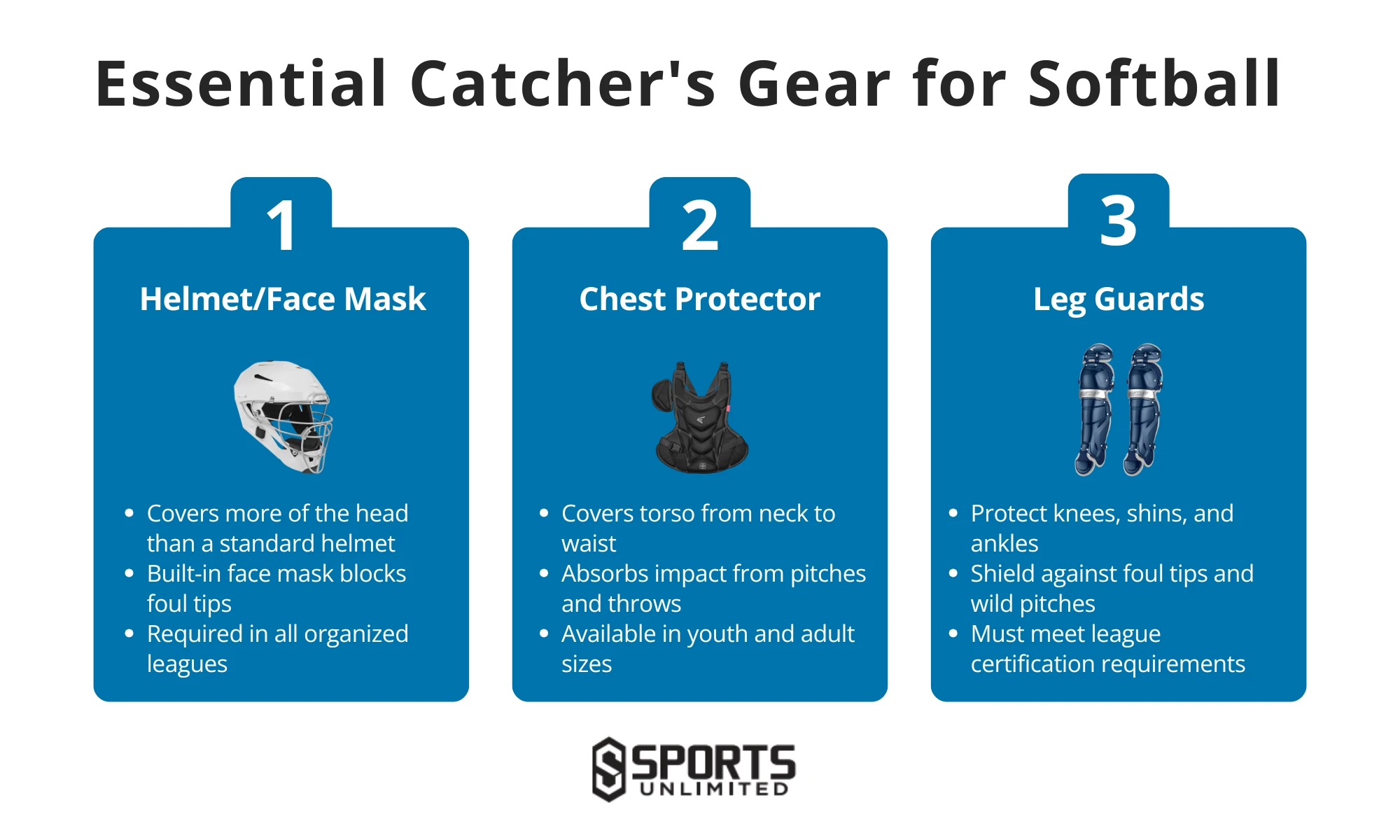
A complete catcher's equipment list includes:
- Catcher's helmet: Covers more of the head than a standard batting helmet and typically includes a built-in face mask.
- Chest protector: Covers the torso from neck to waist. Available in different sizes for youth and adult players.
- Leg guards: Protect the knees, shins, and ankles from foul tips and wild pitches.
- Catcher's mitt: Wider and more padded than a standard softball glove, built to handle repeated impact.
Slow Pitch Catcher vs. Fastpitch Catcher
A slow pitch catcher faces less velocity than a fastpitch catcher, but the gear requirements are similar. Most leagues still require a chest protector, leg guards, and a catcher's helmet regardless of pitch speed, and while a slow pitch catcher may opt for lighter gear, certified equipment is still required.
Young players catching in youth leagues should always use properly fitted gear. Equipment that is too large shifts during play and reduces protection, making proper fit just as important as having the right gear in the first place.
Sports Unlimited: Your Source for Softball Gear
Building out a complete softball equipment list is straightforward once you know what you need. The right gear improves player safety, builds confidence, and supports better performance from the first game of the season. That applies to every level, from a young player just getting started to an experienced adult league competitor.
Sports Unlimited has been in the sporting goods business since 1983 and has operated fully online since 2008. The site carries softball bats, gloves, batting helmets, catcher's sets, and more from trusted brands. Orders placed before 3 PM ship the same day, and select products qualify for free 2-day shipping.
Sports Unlimited carries certified equipment that meets league standards for players at every level. Browse the selection below to get started:
- Softball Bats — Shop fastpitch and slow pitch bats with USA Softball certification marks across all major brands.
- Softball Gloves — Find gloves by position and size for youth and adult players.
- Catcher's Equipment — Browse complete catcher's sets including helmets, chest protectors, and leg guards.
- Batting Helmets — Shop helmets with and without face masks to meet your league's requirements.