
Types of Concussions: What Athletes and Parents Need to Know
Posted by Lou Rusnock on Jun 4th 2026
- Why Concussion Type Matters
- The Six Concussion Types Based on Symptoms
- Concussion Symptoms to Know
- How Concussions Are Graded and Diagnosed
- Recovery and What to Expect
- Sports Unlimited: Protecting Athletes Starts with the Right Gear
- Frequently Asked Questions
The Short Answer: A concussion is a type of traumatic brain injury caused by a bump, blow, or jolt to the head or body that makes the brain move rapidly inside the skull. Concussions are generally categorized by their symptoms, which can include effects on physical function, vision, balance, cognition, and mood.
The CDC defines a concussion as a mild traumatic brain injury that creates chemical changes in the brain and can sometimes damage brain cells. However, the word "mild" refers to the fact that concussions are rarely life-threatening, not that the injury itself is minor.
Why Concussion Type Matters
Not all concussions look the same. One athlete might struggle with headaches while another deals with balance problems or anxiety. Identifying the type matters because different symptom profiles call for different treatment approaches. For athletes in contact sports like football, lacrosse, and hockey, understanding the types of concussions can shorten recovery time and prevent a second injury before the first has healed.
The Six Concussion Types Based on Symptoms
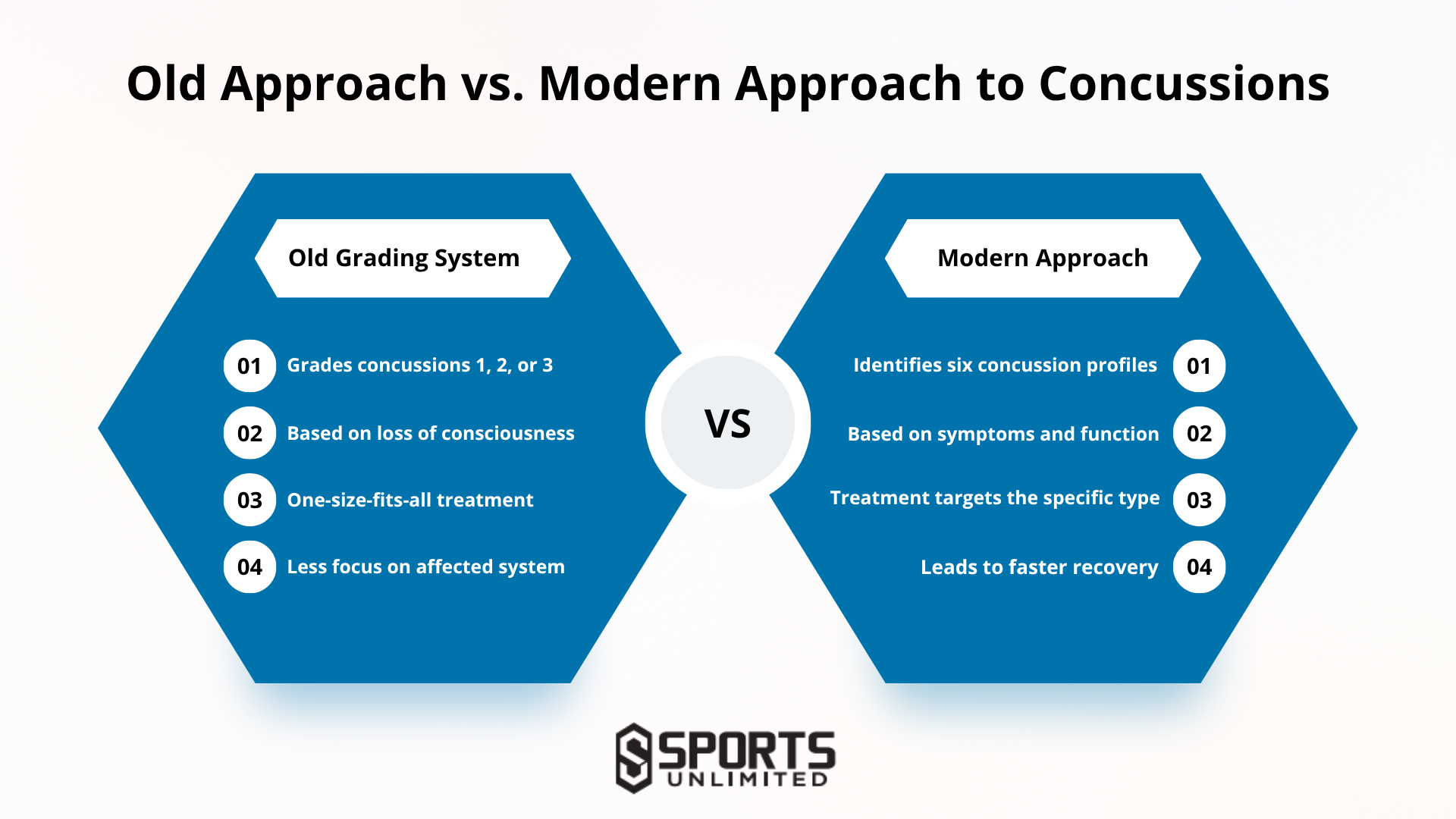
Modern sports medicine has moved away from simply labeling concussions as mild, moderate, or severe. UPMC Sports Medicine, one of the leading concussion programs in the country, identifies six concussion types based on the symptoms a patient experiences. Rather than applying a one-size-fits-all protocol, this approach helps healthcare professionals target treatment to what is actually happening in the patient's brain and body.
Cognitive Fatigue Concussion
This type of concussion affects mental tasks and brain function, making it hard to concentrate, multitask, and retain new information. Fatigue after mentally demanding tasks is common, and students or working adults often notice it most because it directly impacts reading, studying, and problem-solving. Treatment typically involves neuropsychological assessment and a gradual return to cognitive activity.
Ocular-Motor Concussion
An Ocular-Motor Concussion affects the visual system, causing symptoms like double vision, difficulty tracking moving objects, eye strain when reading, and trouble focusing on screens. The eyes and brain work closely together, and when that connection is disrupted, even basic daily tasks can become uncomfortable. Vision training is often part of the recovery process for this concussion profile.
Post-Traumatic Migraine Concussion
This type of concussion causes migraine-like symptoms including headaches, nausea, and sensitivity to light or noise. Loud environments like gyms or stadiums can make symptoms significantly worse. Because the symptoms closely overlap with migraine headaches, this is one of the more recognizable concussion profiles, though it can also be easy to misattribute to an existing migraine condition. Headache management and avoiding known triggers are the primary focus of treatment.
Vestibular Concussion
The vestibular system helps control balance and spatial orientation. When a concussion affects this system, it can cause dizziness, balance problems, and trouble coordinating head and eye movements. Athletes with this concussion profile may feel unsteady when walking or changing directions, and vestibular therapy is often used to help retrain the balance system.
Anxiety and Mood Concussion
This type of concussion affects emotional regulation and mental health, causing symptoms like excessive worry, irritability, depression, or difficulty with social interactions. Because these symptoms may not appear until days after the injury, they can be difficult to connect to the original head trauma. Counseling and cognitive behavioral therapy are often used to help manage this concussion profile.
Cervical Concussion
A cervical concussion involves the spine and neck. Pressure or stress on this area can cause or worsen headaches, and symptoms may be aggravated by poor posture or carrying heavy loads. Physical therapy targeting the neck and upper spine is typically part of treatment for this profile.
Concussion Symptoms to Know
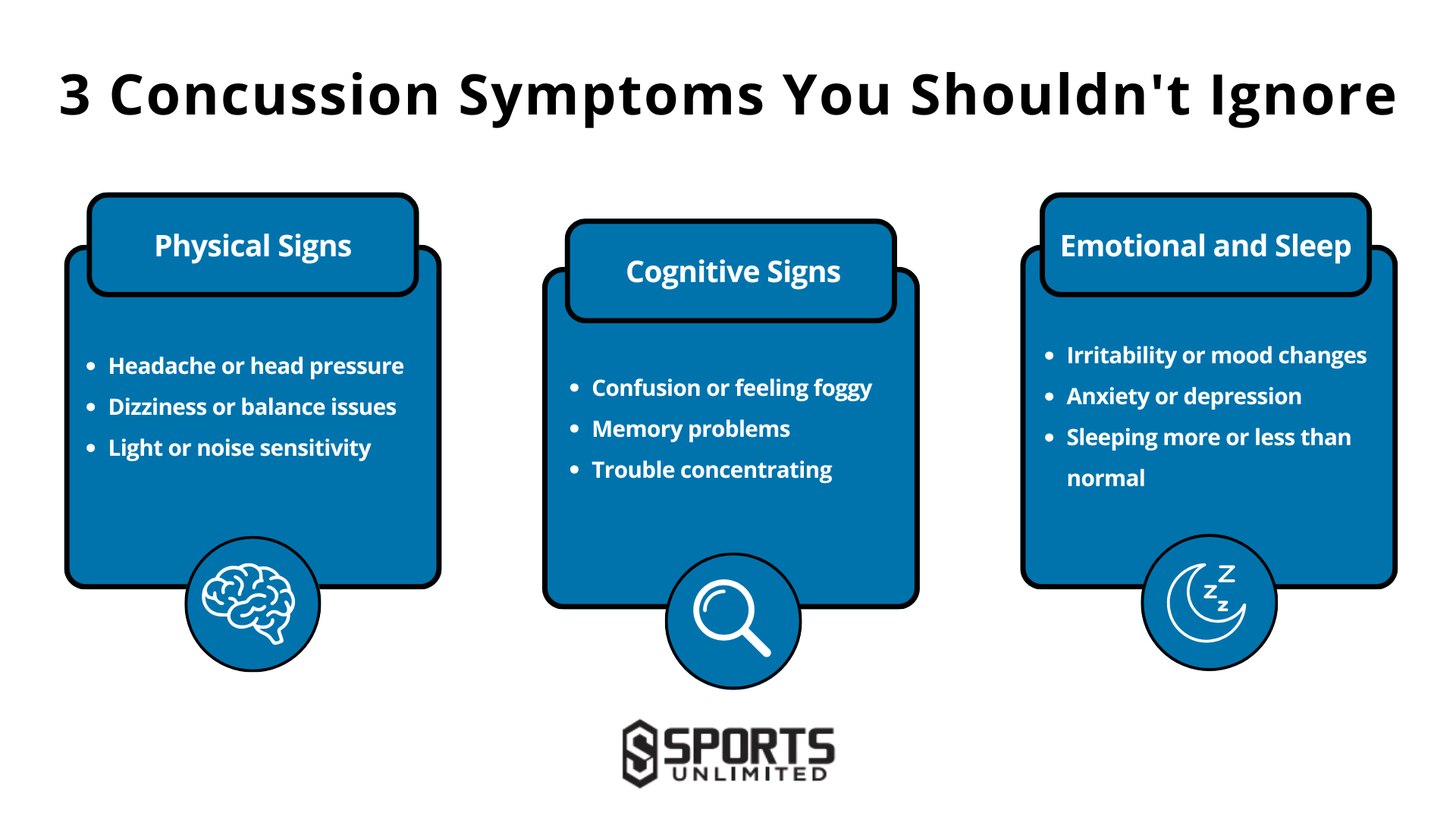
Concussion symptoms do not always show up right away. They may appear within minutes, hours, or even days after the injury. According to the CDC's concussion symptom page, symptoms may change during recovery and can affect how a person feels, thinks, acts, and sleeps.
Common concussion symptoms include:
- Physical: Headache, dizziness, nausea, balance problems, sensitivity to light or noise, and fatigue
- Cognitive: Confusion, memory loss, trouble concentrating, feeling slowed down, and difficulty thinking clearly
- Visual: Blurred or double vision, eye strain, and difficulty tracking motion
- Emotional: Irritability, anxiety, depression, and feeling more emotional than usual
- Sleep-related: Sleeping more or less than normal and trouble falling asleep
A common misconception is that a concussion is only serious if the person loses consciousness. This is not accurate. In fact, only about 10% of people lose consciousness with a concussion, meaning a person can have a significant concussion and remain fully conscious throughout.
If symptoms include a worsening headache that will not go away, repeated vomiting, slurred speech, or loss of consciousness, seek immediate medical attention.
How Concussions Are Graded and Diagnosed
The Old Grading System
Older resources may reference a Grade 1, Grade 2, and Grade 3 concussion system based on symptom duration and loss of consciousness. This grading model still appears in some articles, but many clinicians have moved away from it. Most healthcare providers today diagnose concussions as present or absent and evaluate recovery based on symptoms, cognitive function, and how the injury is affecting the patient's daily activities rather than assigning a grade.
How Concussions Are Evaluated Today
A healthcare provider will typically review the patient's health history, ask about symptoms, and perform a physical exam. Imaging tests like MRI or CT scans may be ordered to rule out more serious injuries like bleeding in the brain, but they cannot diagnose a concussion on their own. Cognitive testing, balance assessments, and symptom tracking are the main tools used to evaluate severity and guide the recovery process.
| Concussion Type | Primary Symptoms | Common Treatment Approach |
|---|---|---|
| Cognitive Fatigue | Trouble concentrating, mental fatigue, memory issues | Neuropsychological assessment, gradual return to cognitive tasks |
| Ocular-Motor | Double vision, eye strain, difficulty tracking | Vision training, reduced screen time |
| Post-Traumatic Migraine | Headaches, nausea, light and noise sensitivity | Headache management, trigger avoidance |
| Vestibular | Dizziness, balance problems, spatial disorientation | Vestibular therapy, balance retraining |
| Anxiety and Mood | Worry, irritability, depression, social difficulty | Counseling, cognitive behavioral therapy |
| Cervical | Neck pain, headaches worsened by posture | Physical therapy targeting cervical spine |
Recovery and What to Expect
Recovery Varies by Person
There is no universal timeline for concussion recovery. According to the CDC's HEADS UP program, most children feel better within 2 to 4 weeks, but some have symptoms that persist for months or longer. A prior history of concussions and more severe symptoms right after the injury both increase the likelihood of a longer recovery.
Severity is not always obvious at the start, as the number of symptoms, their intensity, and how they affect daily activities all factor into how serious a concussion turns out to be. This is why getting evaluated quickly matters. Research shows that patients seen within the first week of a concussion recover faster than those who delay care.
Returning to Activity
No athlete should return to a contact sport until all symptoms are gone and a healthcare provider has cleared them. Returning too early increases the risk of a second concussion before the brain has fully healed. Most sports medicine guidelines recommend starting with light exercise and progressing through sport-specific drills before returning to full contact.
Sports Unlimited: Protecting Athletes Starts with the Right Gear
Helmets That Meet Modern Safety Standards
No football helmet can eliminate the risk of concussion or prevent every head injury. That's why proper fit, certified construction, and choosing the right helmet for the player are so important. Sports Unlimited carries football helmets from top brands in the game, with options built to current safety standards and an industry-leading online customization experience. Orders placed before 3 PM ship the same day.
Frequently Asked Questions
What are the most common types of concussions?
The most commonly seen concussion profiles are post-traumatic migraine, vestibular, and cognitive fatigue types. Post-traumatic migraine is one of the most recognized because its symptoms closely resemble migraine headaches. Vestibular concussions are also common among athletes because balance and coordination are closely tied to the movements required in contact sports.
Can you have a concussion without losing consciousness?
Yes. Loss of consciousness occurs in only about 10% of concussion cases. Most people who suffer a concussion remain fully conscious. Assuming that no blackout means no serious concussion is one of the most common and dangerous misconceptions about head injuries.
How long does it take to recover from a concussion?
Recovery time varies by person. Most people feel better within 2 to 4 weeks. Some, particularly those with a prior concussion history or more severe early symptoms, may have symptoms that last months. Getting evaluated quickly and following a structured recovery plan generally leads to faster recovery.
When should you go to the emergency department after a head injury?
Seek immediate medical attention if symptoms include a worsening headache, repeated vomiting, slurred speech, seizures, or loss of consciousness. These are warning signs that should never be ignored.
Are concussions more common in certain sports?
Yes. Football, hockey, lacrosse, soccer, and basketball carry higher concussion risk due to the frequency of contact and collision. According to the CDC, boys' tackle football, girls' soccer, and boys' lacrosse have among the highest concussion rates in high school sports. Contact sports account for nearly half of emergency department visits for concussion and traumatic brain injury in children.