
How to Break In a Baseball Glove
Posted by Doug Ervin on Jan 13th 2026
Table of Contents
- Why You Need to Break In a New Glove
- Decide How You Want the Glove to Close
- What You'll Need
- Step-by-Step: The Simple, Safe Break-In Method
- Optional Methods That Can Help
- What NOT to Do
- Break-In Tips by Position
- How Long Does It Take to Break In a Baseball Glove?
- In-Season Care to Keep Your Glove in Shape
- Shop Sports Unlimited for Baseball Gloves
At a Glance: Break in a baseball glove by deciding your closing style, lightly conditioning the leather, creating the hinge points where you want the glove to fold, and forming the pocket with a ball and mallet. Then play catch to set the shape. Avoid excessive heat, soaking, and heavy oil. Store with a ball after each session.
Why You Need to Break In a New Glove
A brand new glove arrives stiff by design. Premium leather needs time and attention before it moves naturally with your hand. The break-in process softens the glove's leather just enough for comfortable movement. It also breaks down padding in the right spots and builds "memory" so the glove pocket holds its shape over time.
Benefits of a properly broken-in glove:
- Better ball control with fewer pop-outs
- Comfort and fit that matches your hand
- Consistent transfers and throws
Decide How You Want the Glove to Close
Before you start working on a new baseball glove, think about how you want it to close. Player preference matters more than any single break-in method.
Choose Your Wear Style
The traditional style places one finger in each stall. The two-in-the-pinky method puts your pinky and ring finger together in the pinky stall. This changes the glove's depth and how it closes around the ball. Different glove patterns respond differently to each wear style, so test both before committing.
Pick Your Closing Path and Pocket Depth
Finger-to-thumb closing works well for quick plays and shallow pockets. Fingers-to-palm closing creates a deeper pocket for secure catches. A one-hinge break creates a shallower feel, while a two-hinge break gives you more depth. Some players prefer thumb in or thumb out, fingers straight or rolled, and outfielders often add a slight flare.
Quick Position Guide:
- Infield: Shallow pocket, quick transfers, firm thumb and pinky
- Outfield: Deeper pocket, more flare, strong "snap shut" close
- Catcher: Centered pocket, secure shape, comfortable hinge on the catcher's mitt
- First Base: Well-defined pocket, focus on hinge comfort
What You'll Need
Gather these tools before starting:
- A baseball or softball for pocket shaping
- A glove mallet or wooden mallet (a baseball bat end or dumbbell works with caution)
- A small amount of glove conditioner or glove oil with a rag or sponge
- Rubber bands or a glove wrap for holding the shape overnight
- A soft surface, like a pillow or yoga mat, for pounding the palm pad
Step-by-Step: The Simple, Safe Break-In Method
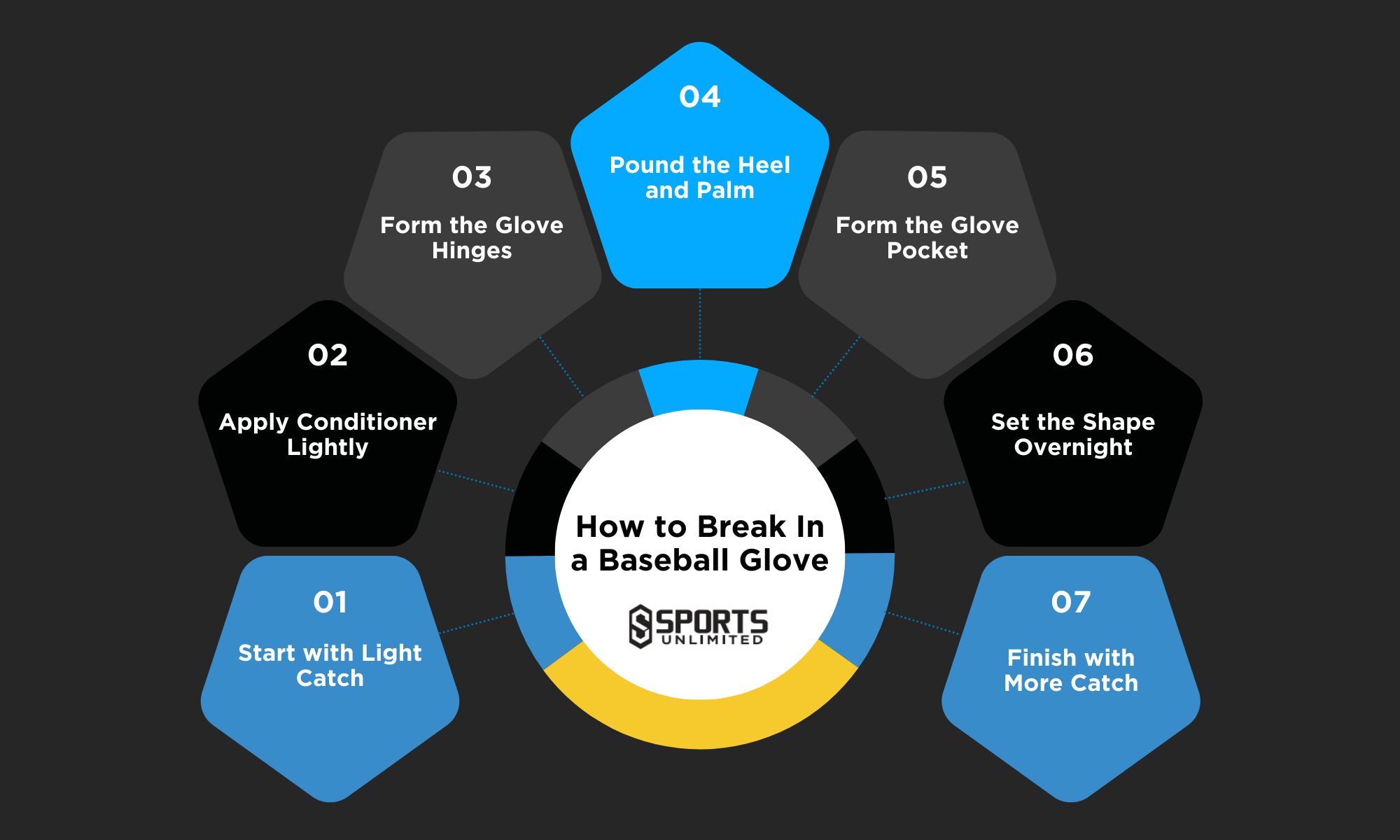
Step 1: Start with Light Catch to Read the Glove
Spend 5 to 10 minutes playing catch or making controlled throws into the pocket. This helps you identify where the stiff glove resists movement. Pay attention to the heel, palm pad, thumb, and pinky inserts, and the web. These spots will need the most work.
Step 2: Condition Lightly
Use a dime-sized amount of leather conditioner. Apply it to your rag or sponge first, not directly to the glove. Spread it evenly across the palm, pocket, finger stalls, laces, and backside. Wipe away any excess to avoid heavy, greasy new leather. A little goes a long way with high-quality leather.
Step 3: Create Your Hinges First
Physically fold the glove where you want it to hinge based on your preferred closing style and how the glove naturally wants to move. Work the hinge points with your hands repeatedly. A one-hinge setup gives a shallower feel, while a two-hinge setup adds more depth to the pocket. Avoid "taco folding" the entire glove flat unless that matches your intentional closing path.
Step 4: Pound the Heel and Palm Padding
Start with the heel, which is a common restriction point preventing full closure. Then work the palm pad by moving up and down to loosen the leather evenly. Use a glove mallet for controlled strikes. Keep your non-mallet hand out of the strike zone and never hit the finger stalls while your hand is inside the ball glove.
Step 5: Form the Pocket
Aim your mallet impacts at the catch zone, which includes the glove pocket, lower web, and palm. The pocket is not a single dot but a zone spanning the web, fingers, and palm. For infielders, also soften the quick funnel and transfer area. This "second pocket" helps with two-hand plays.
Step 6: Set the Shape Overnight
Place a new baseball in the pocket. Wrap the glove with rubber bands or a glove wrap in an X pattern, securing both top and bottom. Leave it overnight in a dry place at room temperature. Never use direct heat during this stage.
Step 7: Play Catch to Finish
Short catch sessions over a few days complete the break-in period. Catch the ball in the pocket on purpose rather than letting the glove form randomly. Re-wrap overnight until the shape holds on its own.
Optional Methods That Can Help
Rubber Band Method
Best for holding pocket shape after mallet work or catch sessions. Leave the bands on for a few hours or overnight.
Mallet Alternatives
A dumbbell or bat end works if it will not scuff the leather. Use controlled strikes and place a pillow or yoga mat underneath to protect the glove.
Hot Water Method
Use hot water only for very stiff leather gloves that need extra shaping help. Apply a warm or hot damp cloth rather than soaking the glove. Air dry only and avoid direct heat during drying. This is one of the different methods that requires extra caution.
Shaving Cream Method
Some baseball players use shaving cream to soften tougher leather. A lanolin-based cream can also work. Apply sparingly and let it dry overnight. Do not over-apply.
What NOT to Do
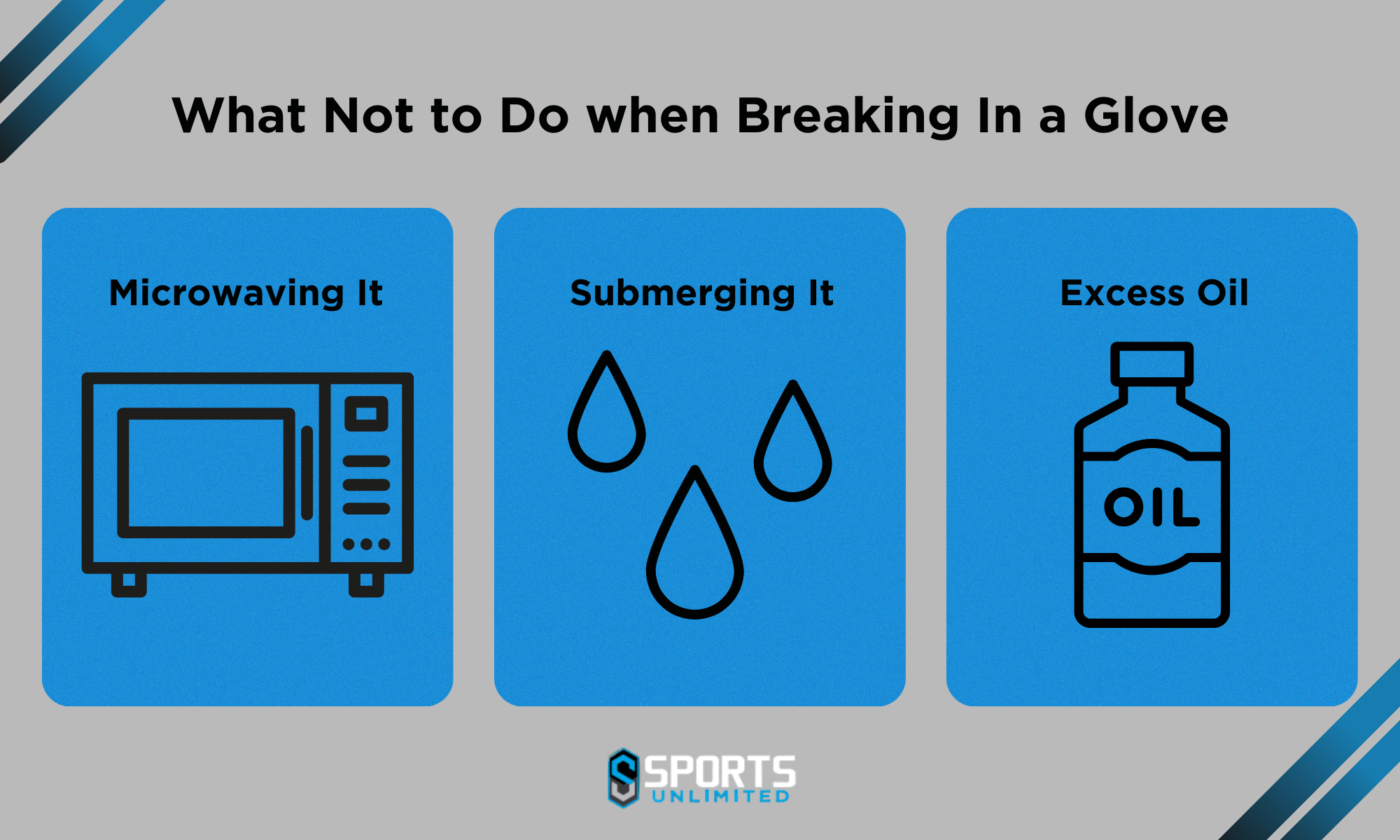
Avoid these "fast" break-in hacks that can damage your glove:
- Microwave or oven heating dries leather, collapses the pocket, and shortens glove life
- Driving over the glove destroys its structure
- Soaking in water can damage high-quality baseball glove leather
- Heavy oils like olive oil or too much glove oil add weight and break down the structure
A good rule of thumb: if it softens the glove in under an hour, avoid it. Also, do not assume you are done just because you can squeeze the glove closed. Without proper pocket memory, you can face future issues like palm bubbles. Follow the glove manufacturer's traditional methods, and the right way takes time.
Break-In Tips by Position
Infield
- Focus on faster transfers and a shallower pocket
- Keep the thumb and pinky firm
- Break in the funnel area for two-hand plays
Outfield
- Create a deeper pocket with more flare
- Aim for a strong close with a "snap shut" feel
- Practice rollover drills to train closing
Catcher and First Base
- Keep the pocket centered and secure
- Shape matters more than softness
- Focus on pocket definition and hinge comfort
How Long Does It Take to Break In a Baseball Glove?
The typical timeline runs from a few sessions to a couple of weeks, depending on the leather quality. Your softball glove or baseball glove is "done" when it shows these signs:
- Closes naturally along your closing path
- The pocket holds a ball without popping it out
- No fighting stiffness at the heel or palm
- Transfers feel consistent
In-Season Care to Keep Your Glove in Shape
Once your glove is broken in, maintain it with these different ways:
- Apply light conditioning periodically using thin layers
- Store with a ball in the pocket
- Do not toss it loose in your bag. Use a glove wrap if possible.
- Keep it dry and air dry if it gets wet
- Check laces regularly. Pull and tighten as needed, and replace worn laces before they snap.
Shop Sports Unlimited for Baseball Gloves
A proper break-in protects your investment and gives you a glove that performs when it counts. Whether you are a softball player looking for your first mitt or a baseball player upgrading to premium leather, the right glove makes all the difference. Sports Unlimited carries a wide selection of baseball gloves from top brands to fit every position and playing style.
From infield gloves built for quick transfers to outfield gloves with deep pockets, you will find options for every level of play. Once you have your glove, take the time to break it in the right way, and it will reward you with seasons of reliable performance.
Shop baseball gloves at Sports Unlimited and get ready for the season.