
Getting Ready for the Season: Your Complete Baseball Equipment List
Posted by Doug Ervin on Feb 10th 2026
Table of Contents
- What To Know Before You Buy
- The Game-Day Checklist
- Your Complete Gear Breakdown
- Bat Standards by Age Group
- Position-Specific Gear
- Sizing Tips
- Get All Your Favorite Gear at Sports Unlimited
At a Glance: Buying baseball gear for a young player can feel overwhelming, but you do not need the most expensive sports equipment on the shelf. You need the right gear for your child's age, position, and league rules. This equipment list covers the core items most players need from t-ball through travel ball, whether they are joining one of the many youth leagues in your area or gearing up for a competitive team.
What To Know Before You Buy
Check Your League Rules First
Before you spend a dime, confirm your local league's specific requirements with the coaches coordinator or head coach. If your child plays in a USA Baseball-sanctioned program, you will need a bat stamped with the USA Bat standard. Some travel programs require USSSA-certified options, and older divisions at the high school level mandate BBCOR bats. Buying the wrong certification means your kid's bat gets rejected at the plate.
Start With the Essentials
New parents often buy everything at once. Start with a glove, bat, helmet, cleats, and a bag, then add position-specific items only as needed. Ask the head coach what your young player truly needs for the first few weeks, and hold off on specialty purchases until you see where they land on the field.
Prioritize Fit and Safety
A comfortable baseball glove that closes easily will always outperform a premium model that your child cannot break in. A properly fitted helmet beats a flashy one that wobbles. When it comes to protective gear, fit and safety should drive every decision.
The Game-Day Checklist
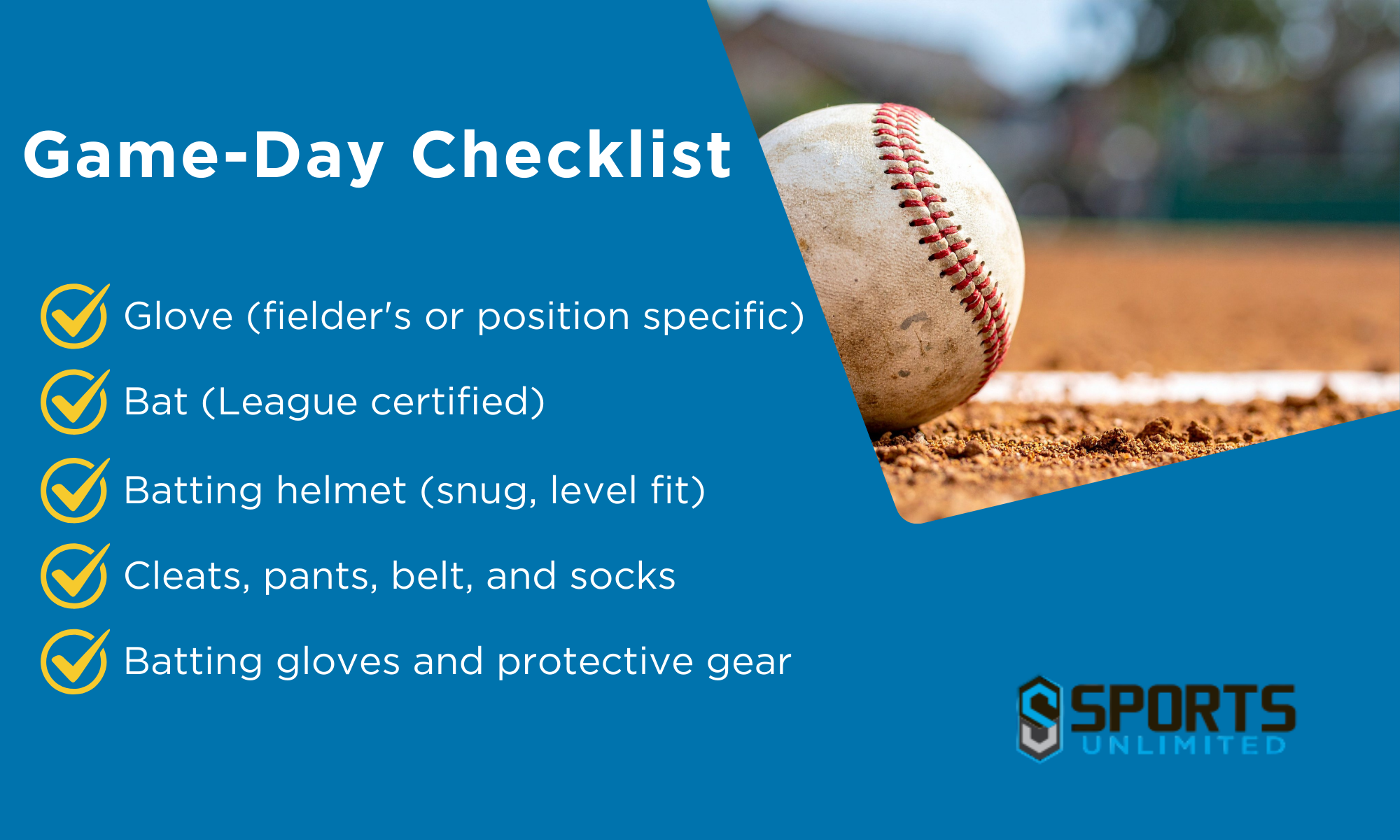
- Glove (fielder's or position-specific mitt)
- Bat (with the correct league certification stamp)
- Batting helmet (league-approved, snug fit)
- Cleats or turf shoes
- Pants, belt, and socks
- Team jersey or practice shirt
- Gloves for batting
- Water bottle
- Required protective gear (protective cup, elbow guard, jaw guards, etc.)
Your Complete Gear Breakdown
Baseball Glove
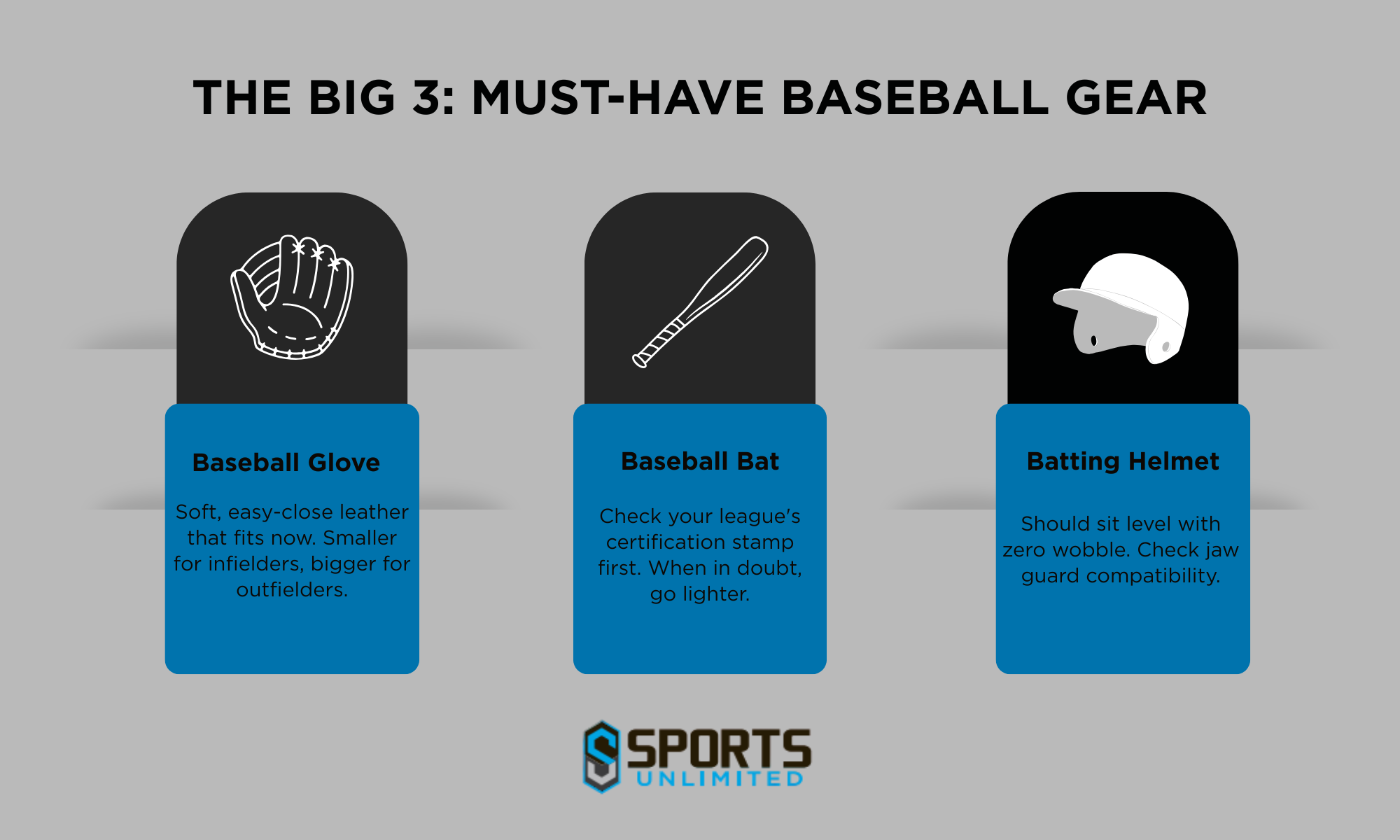
The baseball glove is the most personal piece of gear your child will own. For younger players, a softer leather or synthetic youth model matters more than brand name. Infielders typically use a slightly smaller glove for quick transfers, while outfielders prefer a larger model with a decent pocket for tracking fly balls.
First Base Mitt and Catcher's Mitt
Do not rush into specialty mitts. Many kids rotate positions, so start with a standard fielder's glove. A first base mitt with a decent pocket becomes valuable only when your player is consistently at first. A catcher's mitt is similarly specialized. For younger catchers, prioritize "easy close" models so they can receive pitches cleanly.
Catcher's Gear Set
A complete youth catcher's gear set (helmet, chest protector, and leg guards) is the most cost-effective way to get started. The helmet should stay put when your player shakes their head. The chest protector needs to cover from the collarbone to the waist. Each leg guard should protect the knee and the top of the foot while allowing a comfortable squat. This is the biggest protective gear investment on the list.
Batting Helmet
Every player needs a properly fitted batting helmet. It should sit level, not tipped back, with minimal wobble. Many Little League Baseball programs now require or recommend jaw guards for added protection. If your league mandates face masks, make sure the guard is compatible with your helmet model.
Baseball Bat
The best baseball bat is the one your child can swing with control. A bat that is too heavy leads to slow swings and poor mechanics at the contact point. Start by confirming the correct league stamp. Most Little League programs and USA Baseball-affiliated leagues require bats carrying the USABat standard. Travel organizations may allow USSSA options, and high school programs require BBCOR bats. The USABat standard produces performance similar to wood bats, creating a level playing field for kids in recreational games.
Choosing the Right Bat Size
Focus on the "drop" weight (the difference between length in inches and weight in ounces). Tee ball bats for t-ball players are typically a drop 10 to drop 13. As players move into coach pitch and kid pitch, USA bat options with larger barrel sizes become available, including big barrel bats for travel programs. The maximum barrel size depends on your league. A quick test: have your player hold the bat out with one hand. If it drops immediately, it is too heavy. Browse youth bats sorted by league type to find the right match.
Batting Gloves
While wearing batting gloves is a personal choice, most players find they reduce sting and improve grip. Look for a snug fit, breathable material, and decent palm durability. They wear out, so there is no need to overpay.
Baseball Pants, Belt, and Socks
Durable baseball pants with reinforced knees are a must for any player who slides. Have at least two pairs if your child practices and plays regularly. Most leagues also require a matching team jersey, belt, and socks. Check with your coaches coordinator before purchasing, as many programs provide the jersey with registration.
Protective Cup and Sliding Shorts
A protective cup is required by many local league programs once kids face faster pitching. Look for an appropriate cup size and compression-style shorts that stay in place during running and sliding.
Baseball Cleats
Most youth programs require molded baseball cleats rather than metal spikes. They should fit snug but not cramped, with a small amount of room for growth. Try them on with game-day socks to check for heel slip.
Baseball Bag
A good bat bag needs enough length for a bat, space for a helmet and glove, and durable zippers. Baseball backpacks are the most popular style for youth players. If your child catches, look for a larger catcher's bag that fits body armor alongside the standard items.
Elbow Guard and Extra Protection
As players advance into faster pitching, an elbow guard becomes valuable protective equipment. It shields the batter's lead elbow and builds confidence in the box. At the t-ball level, this is unnecessary, but in older divisions, it is a personal choice well worth considering.
Training Aids and Extras
Simple training aids like a batting tee, soft practice balls, and a bounce-back net create more skill growth than expensive gadgets. A fresh bat grip also improves control at the contact point for very little cost. These tools help a young player build coordination between organized practices.
Bat Standards by Age Group
| Age / Division | Common Type | Certification | Max Barrel | Notes |
|---|---|---|---|---|
| T Ball (4-6) | Tee ball bats | USABat standard | 2 1/4" | Lightweight; focus on swing control |
| Coach Pitch (6-8) | Youth USA bat | USABat standard | 2 5/8" | Balanced drop weights (-10 to -13) |
| Kid Pitch (9-12) | USA bat or big barrel (travel) | USABat / USSSA | 2 5/8" or 2 3/4" | Check your local league for rules |
| Junior/Senior (13-15) | USA, USSSA, or BBCOR | Varies | 2 5/8" to 2 3/4" | Some programs require BBCOR at 14+ |
| High School (14-18) | BBCOR bats or wood bats | BBCOR (.50) | 2 5/8" | Drop 3 only; wood bats always legal |
Always verify rules with your local league before purchasing. The USA Baseball website is the best resource for current USA Baseball regulations.
Position-Specific Gear
Catchers
Catchers have the biggest gear needs. If your child only catches occasionally, ask whether team-owned gear is available. If they catch regularly, prioritize a properly fitting helmet, a chest protector, a leg guard set that allows comfortable movement, and a catcher's mitt that they can actually close.
Pitchers and First Basemen
Youth pitchers do not need a special glove. What helps most is a baseball glove they can control and solid cleats with good mound traction. A first base mitt is a real advantage when a player is stationed at first consistently, but a standard glove works fine for occasional use.
Sizing Tips
Gloves, Helmets, Bats, and Cleats
For gloves, the key rule is simple: if your child cannot close the glove, go softer or more youth-oriented. For helmets, measure head circumference and confirm no side-to-side rock. If face masks or jaw guards are required, check compatibility. For bats, focus on league certification, swing control, and comfort at the contact point. When in doubt, go lighter. For cleats, try them with game-day socks and check for heel slip.
Get All Your Favorite Gear at Sports Unlimited
This baseball equipment list might look extensive, but you can find everything in one place. Sports Unlimited has been outfitting players for over 40 years with a wide selection of bats, gloves, catcher's gear, bags, and more from the top brands in the game. Whether it is your child's first day of practice or their final year of varsity, everything you need is in one spot. Orders before 3 PM ET ship the same day, and most orders over $49 qualify for free shipping.
Youth gear does not need to be perfect. It needs to be appropriate. When a glove closes easily, a bat feels controllable, and a helmet fits snugly, kids play more freely and improve faster. Start with the essentials, buy for fit and league rules, and let your young player's interests guide the upgrades.